EXPLORE
Sri Someswara Temple
-
Period : 12th Century,
Deity : Shiva
District : Kolanupaka, Yadadri- Bhuvanagiri district, Telangana
Info:
Sri Someswara temple is situated in the Kolanupaka village, Aler mandal in Yadadri- Bhuvanagiri district of Telangana state. Kolanupaka is one among the Pancha shektrams of Vera Saivam sect. The principle deity of the temple is Lord Siva. The temple famous for 1000 Linga shrine in the form of a Linga called as Kotilingalu.
Management:
It is a protected monument of the Department of Heritage Telangana and maintained by the Endowments department of Telangana State.
Legend has it that the Linga present in the temple is self-manifested and has been worshiped from Satya yuga. Another legend has it that Renukacharya, the prominent Veera Saiva philosopher is believed to have evolved from the main Linga splitting into two who promoted the Veera Saiva philosophy by residing in the temple and merged into the Linga.
Renukacharya established Maths for 18 castes and welcomed people from lower sections to adopt Saivism to counter the growing influence of Jaina and Buddhist sects.
Hence the temple is frequented by Veerasaivates from the states of Maharashtra and Karnataka apart from Andhra and Telangana.
Kolanupaka is an important site from the early periods and evolved as the prominent Jain site during medieval period and also served as the local headquarters under the Rastrakutas and Kalyani Chalukyas.
The Someswara temple was extended during the rule of Someswara III of Kalyani Chalukyan dynasty. During the Kakatiya rule, the Someswara temple underwent expansion and renovation. Several pillars, mandapas, icons and artistic elements were added to the original structure.
Architecture:
The temple complex consist of several structures that are built over in different periods by the Rastrakutas, Kalyana Chalukyas and Kakatiyas. The complex consist of main shrine enclosed in a prakara with multiple mandapas and structures around.
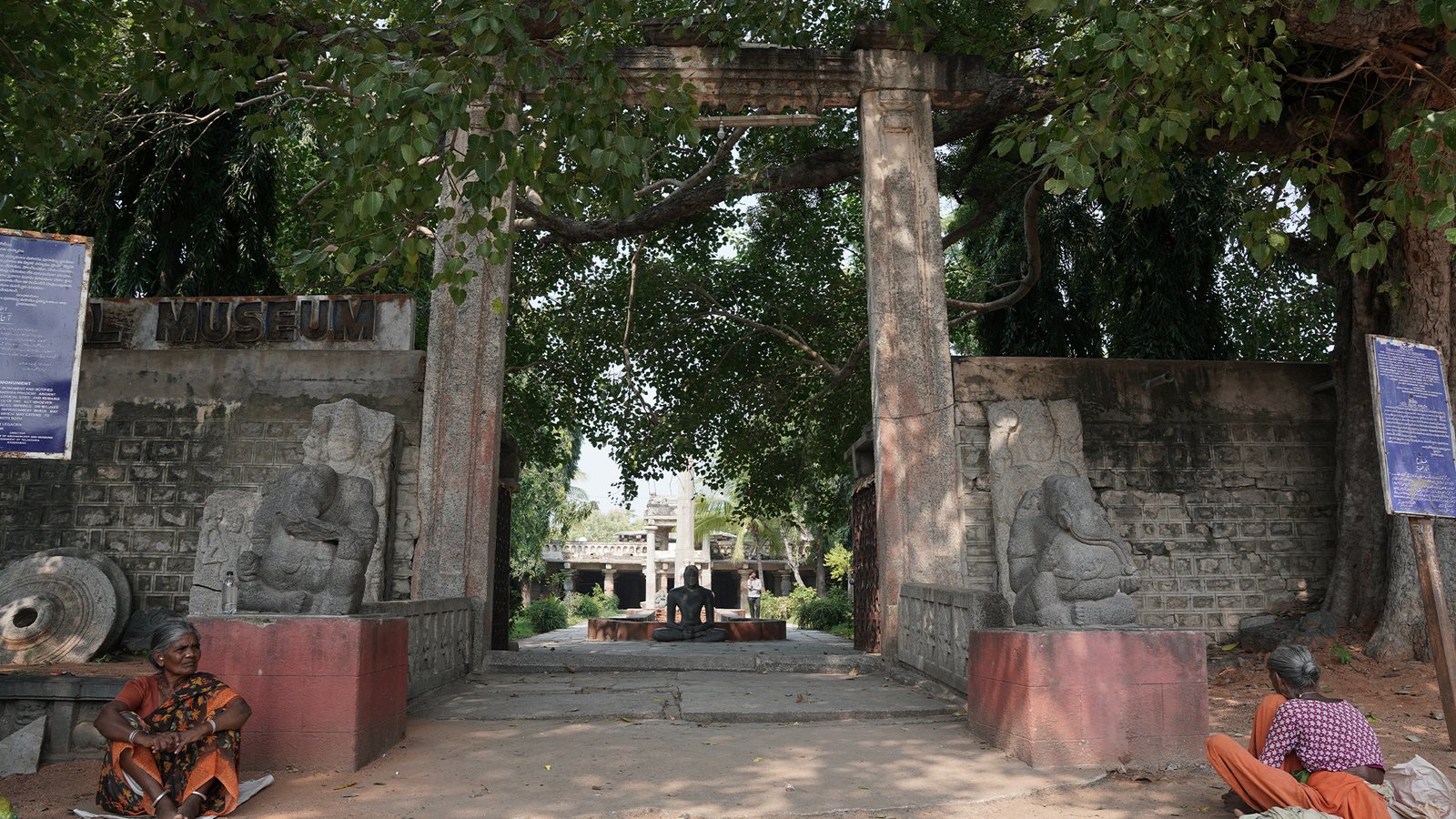
The first prakara forms a closed rectangle with a Kalyani Chalukyan Torana (Arch) on the east which opens into cloister used as the museum for displaying the sculptures and icons found in the of temple complex. There is a small shrine just before the Torana lying below ground level containing a Linga and a small Nandi. The first enclosure has pathway with a Jayastambham and a small four pillared mandapa which has Nandi just in front of the entrance gateway. The cloister in the west wall has two chambers on either side of the second entrance gateway in which Veerabhadra icon and Linga are placed respectively.
There is shrine mandapa, offcourse sunken into the ground called as Sakthi mandapa wherein people take oaths to prove the facts.
The entrance leads to a courtyard in which the main shrine is located.
The main shrine consist of garbhagriha, arthamandapa, mukhamandapa, mahamandapa a sabhamandapa. The mahamandapa and mukhamandapa are pillared halls which consists of architectural members belonging to both Kalyani Chalukyan and Kakatiya periods. There is Linga with a nandi infront of it placed in between the central pillars in both mandapas. The arthamandapa has two chambers on either sides of its doorframe in which one is dedicated to Ganesh and the other to Chandi, the consort of the main deity. The doorframe of arthamandapa has a projection of pillar and a perforated window on both sides and the lintel part has circular nodes facing downwards. The sanctorum is small square chamber accessible through a door in the east with a small figure of Gajalaxmi on the lintel. The main chamber consist of Linga in the center and behind it there is a stucco sculpture of Renuka Siddhacharya in standing pose.
The intrsting aspect of the complex lies in the double and triple storied mandapas, the Prataparudra temple (13th century) and individual temples of different castes located around.
Art & Sculpture
The Someswara temple complex consist of numerous sculptures and Lingas belonging to different time periods and styles found scattered around. There are icons of Bhairava, Ganesha, Nataraja, Vishnu, Rama, Brahma, Parasurama, Kartikeya, Chamundi, Saraswati, Mahisasuramardhini, Surya, Buddha in dhyanamudra, various forms of Siva and herostones.
The sculptures belonging to the Rastrakuta, Kalyana-Chalukyan and Kakatiya periods based on the decorative elements. Two life-size Dwarapalaka sculptures placed leaning against the wall of outer Prakara and two Ganesha icons placed on either side of the entrance path into the temple are noteworthy.
The most interesting sculptures in the temple are the icon of Mastyavallabha placed in front of the Jayastambham. As per mythology Mastyavallabha is the son of Lord Hanuman born to a demon fish guarding the path to Lanka. The icon of Matyavallabha is very rare and it can be differentiated from the Hanuman icon based on the flanks emerging from the Mastyavallabha mouth while all other features are similar to Hanuman.
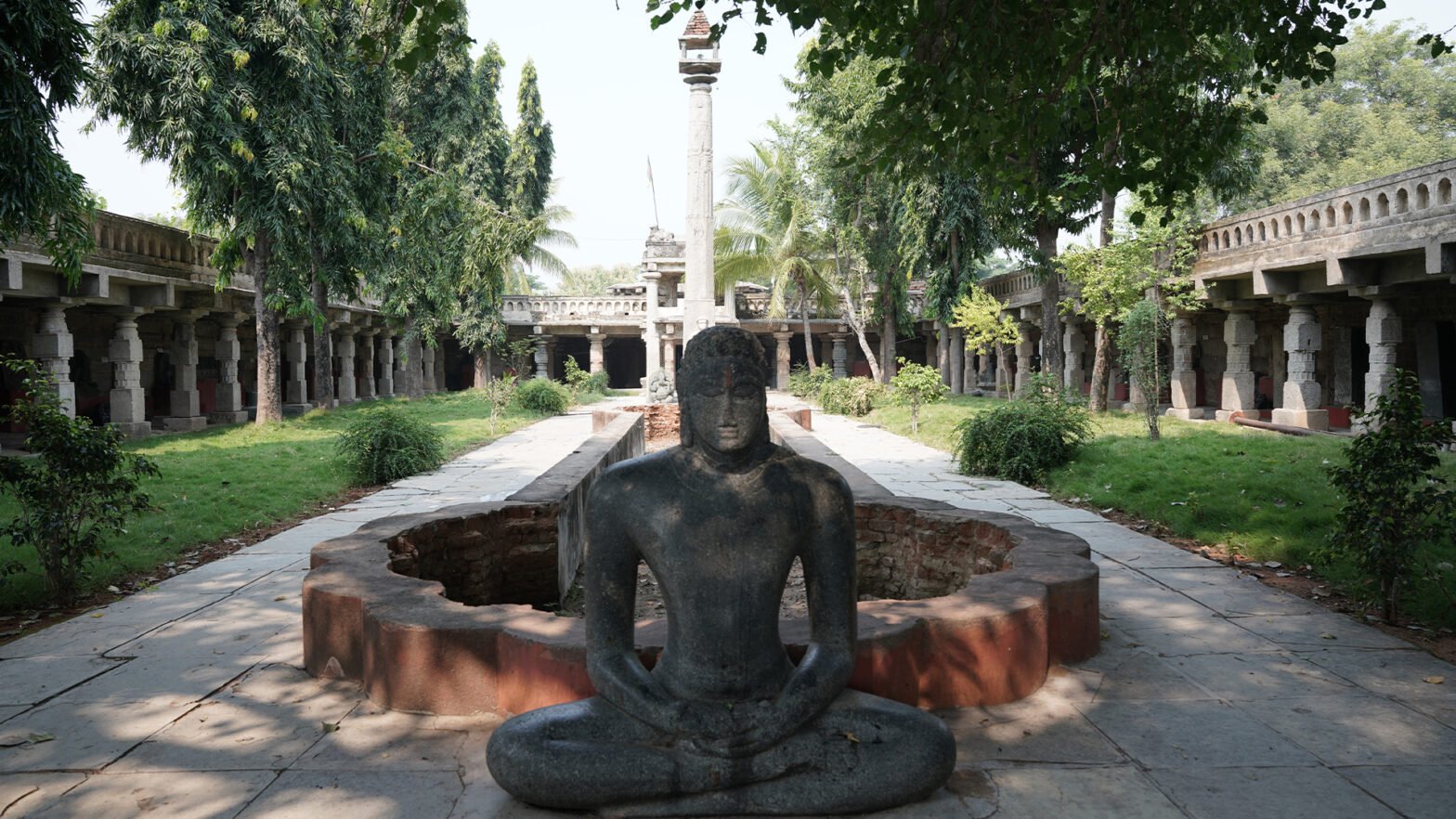
There are notable amount of Jaina sculptures found it the temple complex now shifted to different locations. The idol of a Vardhamana Mahavira Jain sitting in meditation pose is placed on the path leading from the Torana arch.
The major festivals celebrated in the temple are Sivaratri, Kartika-purnima and Renukacharya jayanti. All other holy days as per the Veera-Saiva tradition are celebrated in the temple.
6AM-7AM