EXPLORE
Somaramam temple
-
Period : 9th Century,
Deity : Shiva
District : Bhimavaram city, West Godavari, Andhra Pradesh.
Info:
Someswara temple also known as Somaramam temple, one among the Pancharamas, the five sacred places of Siva is located in Gunupudi, a small hamlet of Bhimavaram city in West Godavari District in Andhra Pradesh.
Management:
Endowment Department of Andhra Pradesh
Legend has it that a demon king named Tarakasura, obtained a boon from Siva and waged a war on Devas. The war between Indra, King of the Devas, and the demon Tarakasura raged for ten thousand years. Indra lost the battle to Tarakasura and sought the help of Vishnu, who advised Indra to pray to Siva, as the demon had attained the boon from Siva. Siva was reluctant to kill Tarakasura as he was his ardent devotee. Instead, he deputed his elder son Kumara swamy to lead the Army of the Devas. Tarakasura wore Siva Lingam around his neck and hence was invincible. On the advice of Vishnu, Kumara Swamy used the Agni Astra to break the Siva Lingam worn by the Demon. When Kumara Swamy killed Tarakasura, broke the lingam into five pieces which started re-uniting again. To prevent the reunification, Indra, Surya, Chandra, Vishnu, and Kumara Swamy, established the Lingam with great devotion in five different places now called as Pancharama Kshetras. Later, Kumaraswamy killed the demon Tarakasura and brought victory to the Devas. Soma, the moon god, took one piece and built a temple and installed the Lingam and named it after him as Someswara and thus this place is named as Somarama.
The origin of the temple is dated to the time of Chalukya Bhima I as per the historians. The earliest inscription found in the temple belongs to the Saktivarma I, the Eastern Chalukyan ruler who ruled from 1001 CE to 1011 CE. There is no specific date mentioned in that inscription but attest the existence of the temple by that time.
The temple initial structures can be observed as belonging to the early 10th century CE as that of other Pancharama temples. Some scholars opine that this temple belongs to slightly later period based on the architectural features. The temple received several renovations and additional structures in time course.
Architecture:
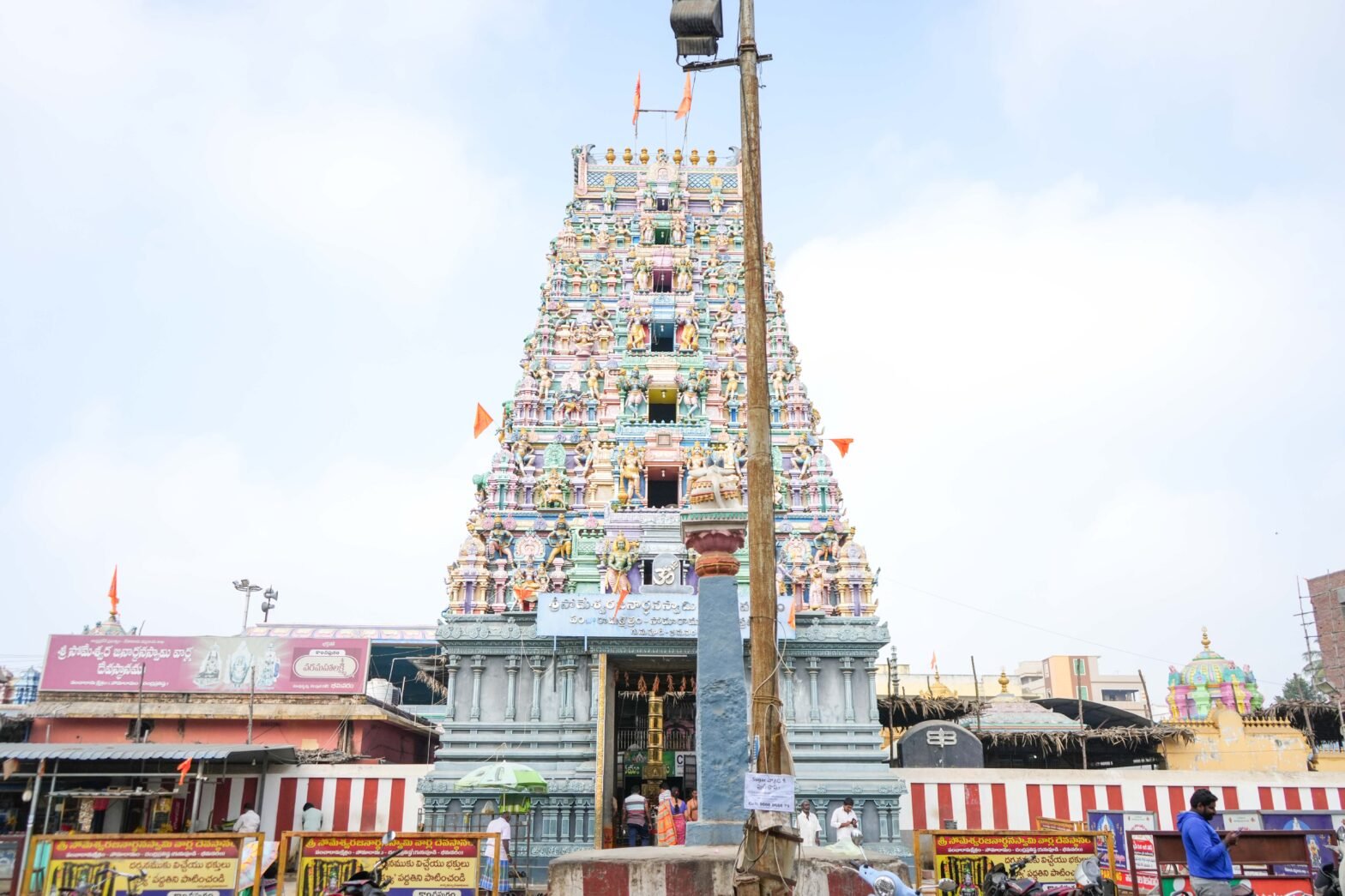
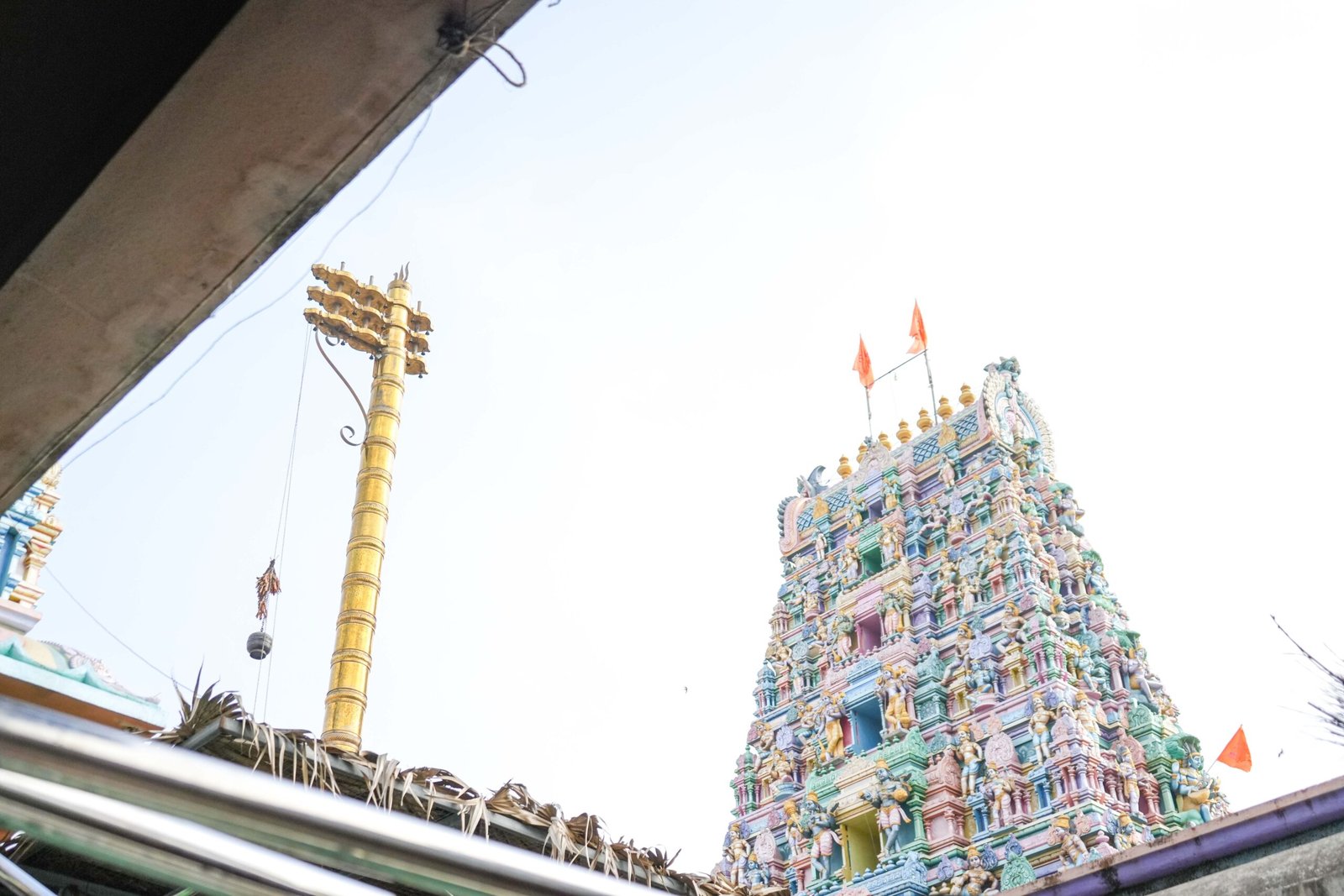
The temple is enclosed with prakara with entrance way in the east surmounted by a seven storied gopura. There is a spacious courtyard in which the main
shrine is built at the center. The temple underwent renovation in many times and the original structures lost their features.
The central shrine is a two storied are as that of other Pancharama temples. The shrine consist of a garbhagriha, antharala and mukhamandapa. There is a recently built two storied mandapa in front of the main shrine. The cloister along the compound wall is also thoroughly modernized. The ground floor consist of the Main linga and the upper floor consist of shrine for Parvati, the consort of Siva.
There are few subsidiary shrines in the courtyard which are modernized except the icons in those shrines.
Art & Sculpture:
The temple consists of only a few sculptures found in the subsidiary shrines. There is an icon of Janardhana, one of the 24 forms of Vishnu depicted with four arms holding Sankhu, Chakra, Gada (Mace) and Padma (Lotus). The other icons are Parvati, Subhramanya, Surya and Hanuman.
The Linga in the main shine has a distinct feature of changing colours. In near full moon days the Linga is observed in pale white texture and in days close to new moon day the Linga turns into light brown shade.
The most celebrated festival in the temple is the day of Sivaratri, on which the temple draws huge crowd throughout the day. Few rituals and special pujas are performed on that day. All other holy days as per the Saiva agamas are performed in the temple.
5AM- 11.30AM, 5.30PM- 8.30PM