EXPLORE
Ksheerarama Temple
-
Period : 9th Century,
Deity : Shiva
District : Palakollu, West Godavari district, Andhra Pradesh
Info:
Sri Ksheerarama temple one among the Pancharamas, the five sacred places dedicated to Lord Siva is located in the Palakollu village and mandal headquarters in West Godavari district in the state of Andhra Pradesh.
Management:
Endowments department of Andhra Pradesh
The local legend has it that Lord Siva pierced his Trisula (Trident) into the earth to quench the thirst of his devotee named Upamanya. The piercing resulted in flow of milk from the earth. Siva manifested himself as Linga on the spot on the request of Upamanya. Thus the Linga is called as Ksheerarameswara, named after the event of milk flow. Later the place is called as Ksheerapura or Palakolanu, meaning pond of milk and in time course it settled as Palakollu.
The history of the temple has its origin in the same period as that of other Pancharama kshetras i.e. during the regime of Chalukya Bhima I(897-922CE). The temple received rennovatons under the rule of Reddi’s of Kondaveedu and Musunuru Nayakas of Warangal. The local chiefs under different ruling dynasties also contributed in maintenance and patronage of the temple.
There are 46 inscriptions found in the temple, out of which the earliest is dated 1156 CE and latest is dated 1640 CE, mostly record donations to the temple.
Architecture:
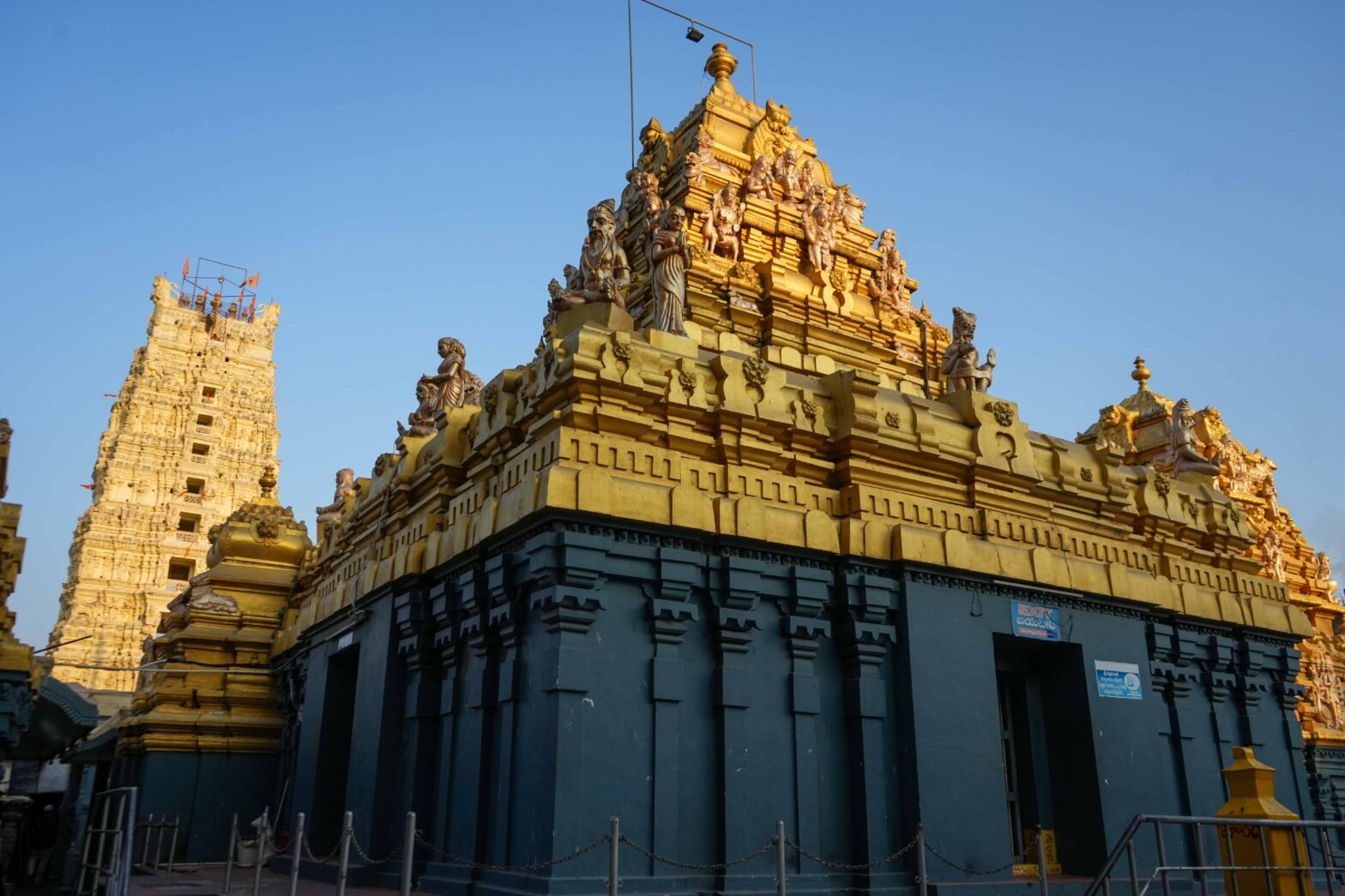
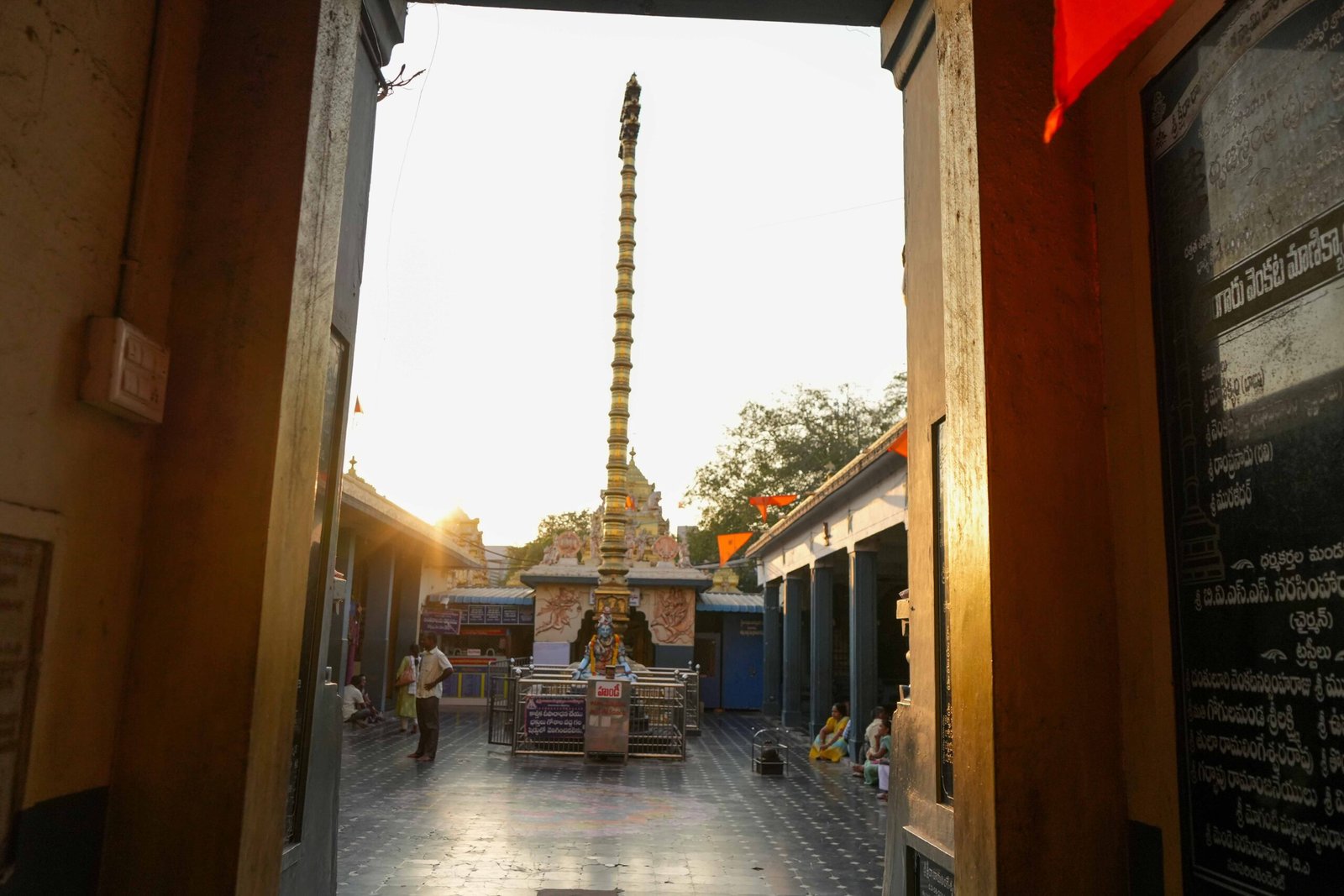
The temple is different from other Pancharama temples in plan as this consist only a single storied central shrine unlike other double storied ones. The temple is enclosed in a prakara with entrances in the east and west. The east entrance is surmounted by a tall gopura of nine storied was 200 feet high. According to the inscriptions the prakara was renovated and gopura was built under the Reddi’s rule. There is a cloister running along the inner walls of the prakara with several niches installed with various Gods and Goddesses.
The main shrine is located at the center of the courtyard and consisting of a garbhagriha, arthamandapa, mukhamandapa and mahamandapa. The garbhagriha and arthamandapa are built on an elevated platform. The sanctum is enclosed with a closed structure having entrances on four directions forming a circumambulatory path around the garbhagriha. The mukhamandapa and mahamandapa are modernized in recent times with concrete work. There is a three storied Vimana on the garbhagriha.
There are two subsidiary shrines on either side of the main shrine, both modernized having a garbhagriha, antharala and mukhamandapa. There are other minor shines built in the courtyard. A Kalyanamandapa of twenty-four pillars with a central elevated platform is built in the north-east corner of the courtyard.
Art & Sculpture:
The icons placed in subsidiary shrines and niches of the cloister exhibit the various iconographic features of different periods. There are icons of Veerabhadra, Bhairava, Chandesa, Surya, Brahma, Mahishasuramardhini, Ganesha, Kartikeya and Hanuman. There are carving on the pillars of the main shrine and natyamandapa depicting forms of Siva and other mythological characters. Gajasura-samharamurti is one among the beautifully carved figures.
The Gopura consists of numerous stucco images depicting various forms of Siva, Gods, Goddesses and Salabanjikas. There is a beautiful scene of Kaliya-mardana, in which Krishna is seen killing the Demon snake Kali by stamping on its hoods.
There are several stucco figures of various gods and goddess made out of concrete on the wall of the cloister executed in recent times.
The most celebrated festival in the temple is the day of Sivaratri, on which the temple draws huge crowd throughout the day. Few rituals and special pujas are performed on that day. All other holy days as per the Saiva agamas are performed in the temple.
6AM- 11.30AM, 4.30PM- 8PM