EXPLORE
Sri Lakshmi Narasimha Temple
-
Period : 16th Century,
Deity : Vishnu
District : Korukonda, East Godavari district, Andhra Pradesh
Info:
Sri Lakshmi Narasimha temple is loactedon a hillock named Vedadri in Korukonda village and mandal headquarters in East Godavari district of Andhra Pradesh. The presiding deity of the temple is Lord Narasimha, the fourth avathar of Vishnu. There is another temple at the foot of the hill dedicated to the same Lord.
Management:
Annavaram Devastanam Board and Endowment Department of Andhra Pradesh
Legend has it that a sage named Paraasaramuni took an Upasana, a devotional life dedicated to the Lord Narasimha and performed penance with immense devotion here. Narasimha was pleased with the devotion of that sage and appeared before him to grant a boon. The Sage request the Lord to self-manifest himself on the hill, to which the Lord manifested himself in miniature form in the miniature shrine upon seeing the poor sage as he has no resources to build a temple. Thus this place came to known as Paraasara-kshetra.
Another legend has it that Pandavas, the five warrior brothers of Mahabharatam stayed here for a few years and worshiped the Lord on the hill.
The hill is also known by different names such as Vedadri, Suvarnagiri, Konagiri and Parijathagiri. The name Korukonda is believed to be obtained from word Koru meaning the Heap of grains as the shape of the hill resemble it.
The history of the temple dates back to the 14th century as per the literary and architectural features. There is an inscription on the pillar in the temple compound dated in 1353 CE registering a demise of a Battaraka, the Guru of Mummadi nayaka, the local chief. It also register the collection of money by a women for the installation of idol in the temple and the grant of land by Mummadi-nayaka. In later period, the temple received great patronage under the rule of Reddi’s of Rajahmundry. Srinatha, the educational minister in the court of Kondaveedu visited the temple and wrote verses in praise of the Lord in which he described the hill as Vedadrigiri.
The temple also received patronage and certain rennovations under Vijayanagara rule. The local Chiefs also granted notable gifts and donations to the temple.
Architecture:
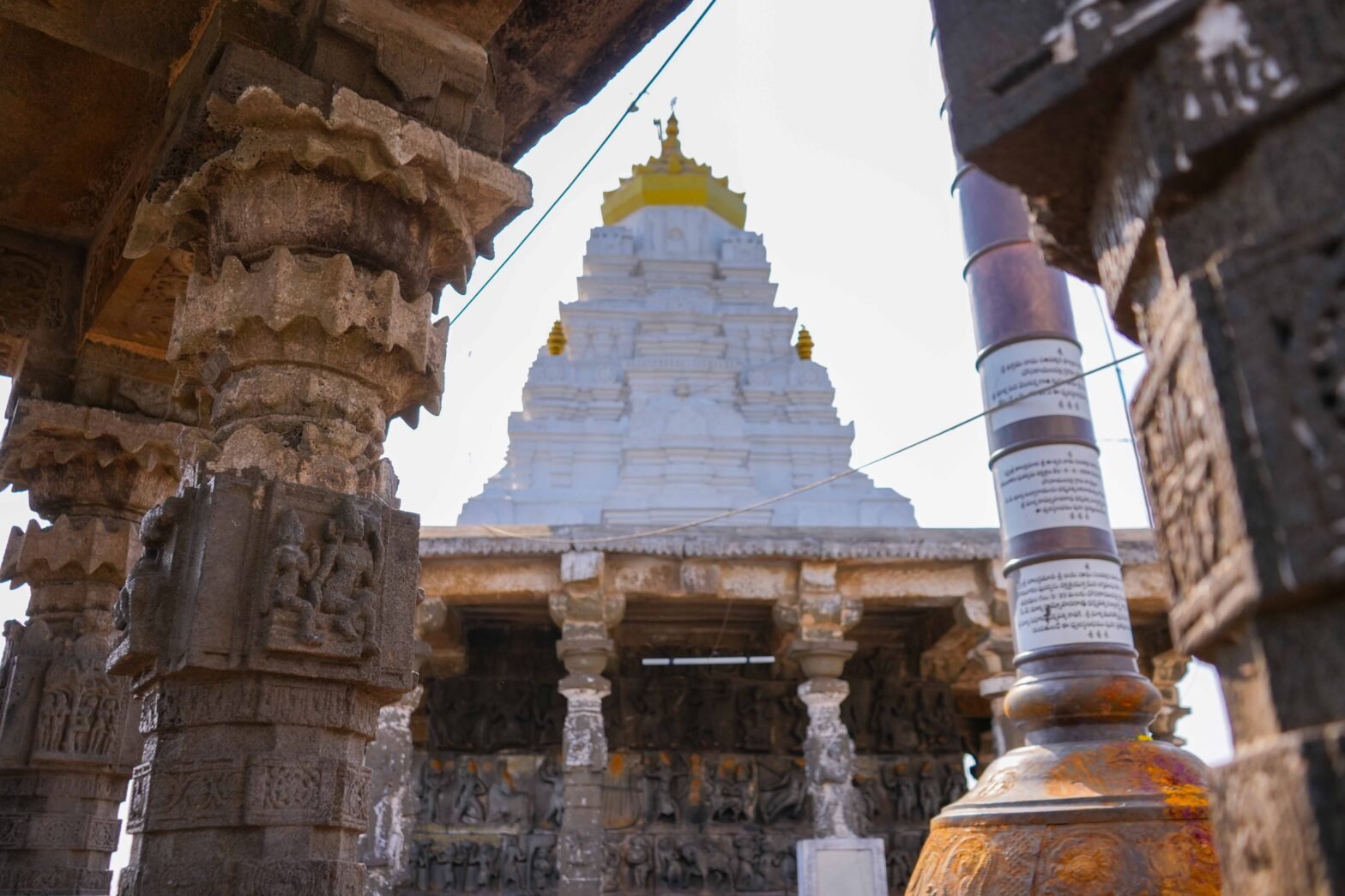
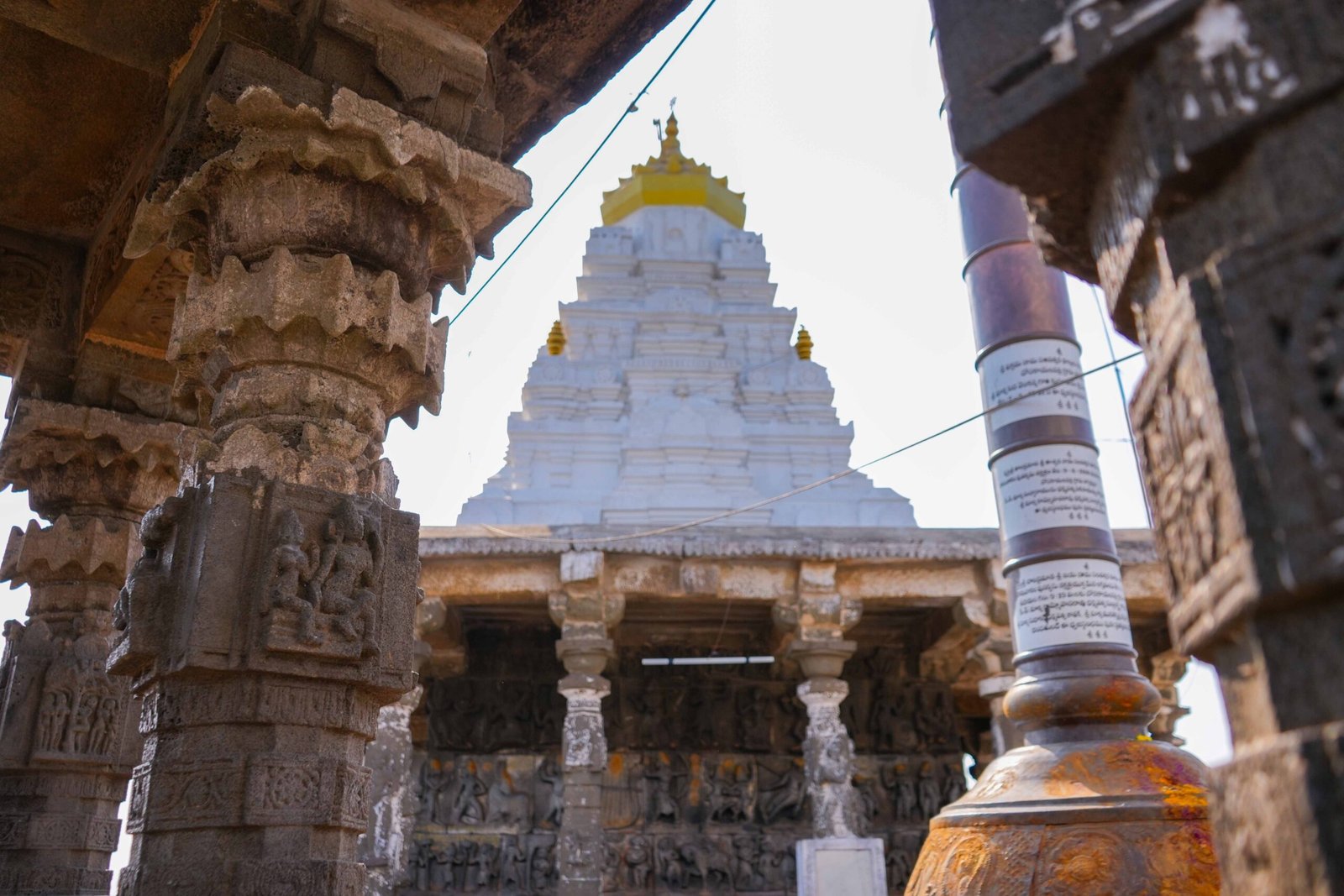
The temple located on the top of the hill is accessed through a flight of 650+ steps. The temple is enclosed with in a compound wall with an entrance way surmounted by a two-storied gopura. The temple consist of a main shrine and a pillared mandapa.
The main shrine is rectangular on plan and consist of a Garbhagriha, an Antharala and a Mukhamandapa, are constructed on an elevated platform. The Garbhagriga is a square chamber with doorway in the east opening into Antharala, the small rectangular chamber. The Mukhamandapa, a hall with four pillars in center is seen next to it. There is a pillared corridor around the temple. There is a four-storied pyramidal Vimana built on the garbhagriha. The pillared mandapa built in front of the temple is peculiar as it has five pillars instead of even number of pillars. It has three pillars in a row on one side and only two pillars on the other side.
The temple located at the foot of the hill is built is considerable size enclosed in a prakara. The shrine consist of a Garbhagriha, Antharala, Mukhamandapa and Mahamandapa. There are subsidiary shrines in the complex.
Art & Sculpture:
A good number of sculptures carved skillfully on the pillars and walls of the temple. The pillars of the temple consist of carvings seen emerging from the pillar such as Varaha avathar, which is depicted as Lord saving Earth and taking flight from the ocean by raising his left leg and placed Bhudevi on his left shoulder. There are other carving such as royal man holding a sword depicted along with his wife, a lady holding a bow depicted with raised foot towards an attender to remove a thorn stuck in her foot. A stone image of a man holding dagger is placed next to the doorway of antharala. Two beautiful Dwarapalaka-images are seen on either side of it.
The main deity of the temple is an interesting element as it consist of only a 9 inch carving of Narasimha depicted with four arms in seated position along with his consort Rajyalaksmi seated on his lap. The miniature icon is carved inside a small block of stone designed as a mini-shrine flanked with dwarapalas on either side.
The most striking feature of the temple are the panels on the exterior surface of the wall of the shrine depicting the episodes of Ramayana. The scenes include Sita-Rama vanavasam, Ravana abducting Sita, Jatayu opposing Ravana, Vanaras building bridge to lanka, Hanuman siting on his tail before Ravana, Ram- Ravana arrow fight and many other scenes from the same epic.
The pillared mandapa outside the shrine also consist of notable sculptures of Krishna such as Venugopala and Krishna stealing clothes of the gopikas.
The most celebrated festivals in the temple are the Nursimha Jayanti and Vaikunta-Ekadasi. Annual Kalyanostavam is also performed in the temple. Other festivals like Ugadi, Sri-ramanavami and Krishnastami is observed with special ritiuals.
The Rathayatra, annual temple cart festival attracts huge crowd from different regions of the state.
9.30AM-12PM