EXPLORE
Bugga-Ramalingeswara Temple
-
Period : 16th Century,
Deity : Shiva
District : Tadipatri, Ananthapur District, Andhra Pradesh.
Info:
The Bugga-Ramalingeswara temple is situated on the bank of river Penna in the Tadipatri city and mandal headquarters in Ananthapur district of Andhra Pradesh. The river Penna takes a northern course at this place and hence considered as the sacred place. The presiding deity of the temple is Lord Siva called by the name Bugga-Ramalingeswara. (Bugga means Water-spring)
Management:
Endowments Department of Andhra Pradesh
Legend has it that the main Linga in the shrine was installed by Lord Rama in the Trethayuga during his exile period and hence the Linga is named after him as Ramalingeswara.
The Bugga-Ramalingeswara temple is constructed under the patronage of Vijayanagara Empire in the 15th century and received additions upto 16th century CE. An inscription found in the temple dated in 1509 CE, belonging to the reign of Vira Narasingaraya mentions that Saluva Timmayagaru, a feudatory constructed the Bhogamandapa, Gopura (Entrance tower) and Prakara. It is evident that the temple pre-dates the above inscription and maybe ascribed to about origin in about 1450 CE.
There is one more interesting inscription in the temple issued by the same chief dated in 1507 CE records the remission of Pendli-sunkam, a tax laid on marriages, which was earlier collected in the areas of Kutti-seema and Pennabadi-seema, both falling under the Gutti-nayamkara(sub-division). The above inscription is issued in favor of god Rameswara for the merit of the Emperor. Another inscription dated in 1509 CE mentions the gift of a village named Neladalapadu renaming it as Viranarshimhapuram, named after the emperor.
There are other inscriptions dated in 1513 CE by Saluva Govindayya and in 1531 CE during the reign of Achutadevaraya recording the land endowments made to temple. The temple experienced muslim iconoclasm for few times which mostly received strong resistance from the local chiefs evident through the only minor damages caused to the structures.
Architecture:
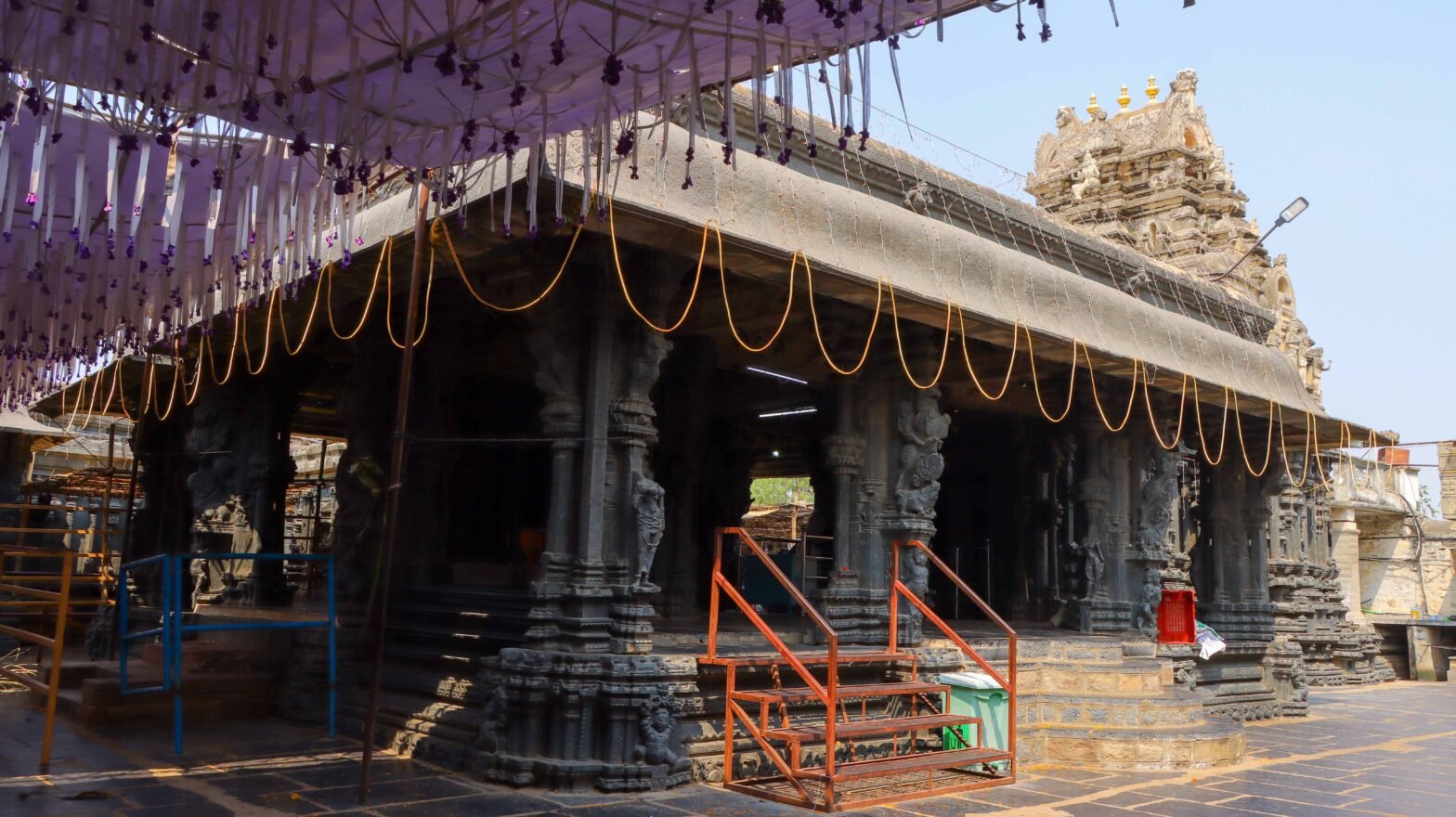
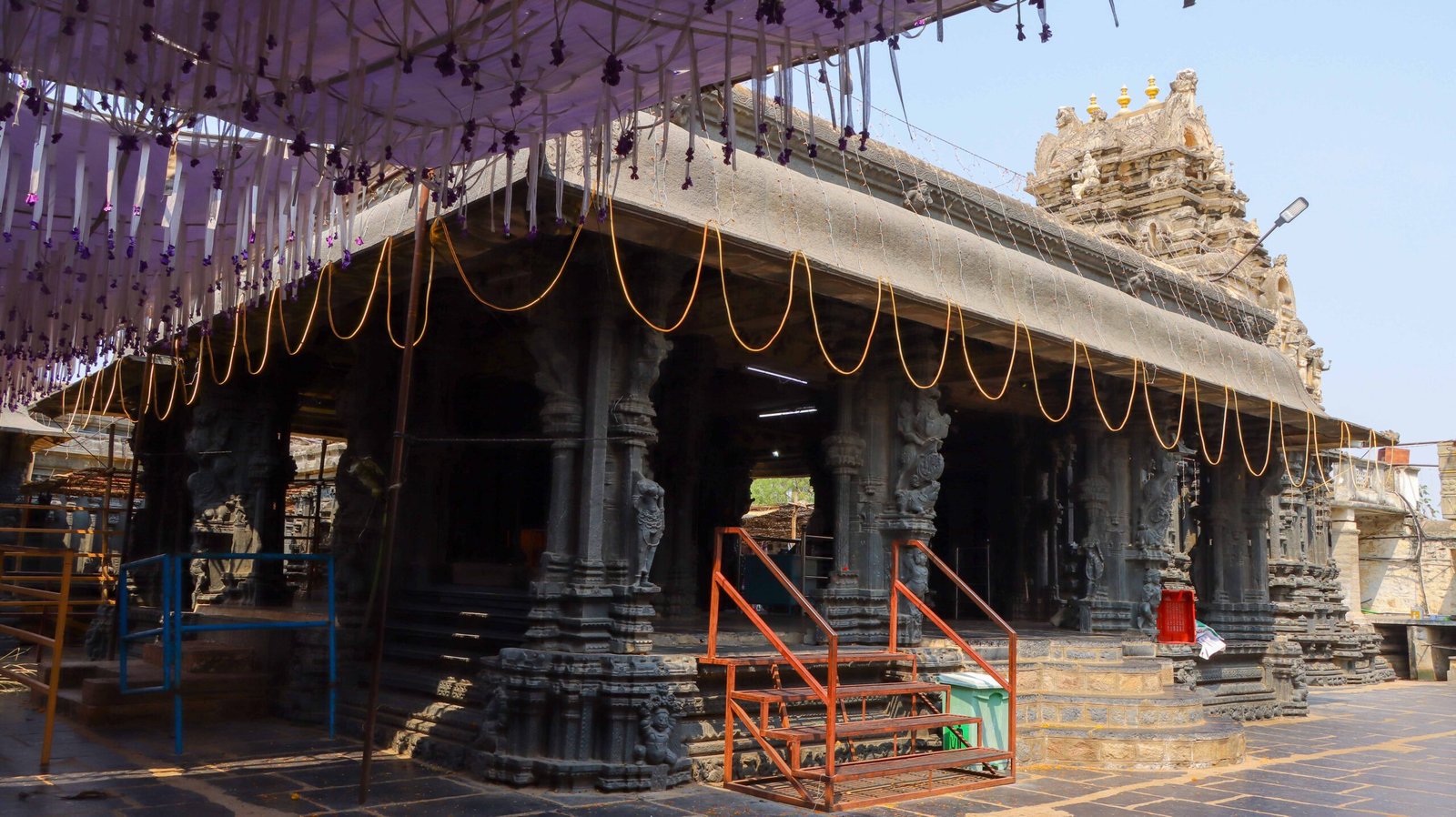
The Bugga-Ramalingeswara temple is one among the finest temples of Vijayanagara temples in both magnitude and architectural aspects. The temple consist of all the architectural members of the Vijayanagara style exhibiting the finest workmanship of the period.
The temple is enclosed in a prakara (compound wall) with entrances through gopuras in the north, west and south. There are two shrines in the courtyard built side by side one dedicated to the main deity Ramalinheswara and other is known as Rama and Parvati shrine. The central shrine and Parvati shrine faces west than usual east direction. There are two subsidiary shrines on either sides of the central shrine and a small madapa. There is a huge Kalyanamandapa on south-west corner of the courtyard and a huge Vedi, the mandapa dedicated for sacred rituals in the north-east corner.
The south and north gopuras are embellished with fine sculpture, the best specimens of the Vijayanagara art and architecture. The South gopura vimana i.e. the superstructure is fallen and consist little ruined brick structure. The structure is a compact unit consisting of all defined elements of gopura of Dravidian order. The north gopura is also similar to that of south gopura. The west gopura consist of single tala (stored) superstructure made of bricks.
The main shrine is located in the center of the courtyard consisting of a garbhagriha, an arthamandapa and a Mukhamandapa. The Mukhamandapa consist of entrances in the west, north and south. There are porches before the entrances in the north and south. The hall contains the typical Vijayanagara pillars carved out of huge granite blocks. The central portion of ceiling has formation of square over square with the central portion carved as beautiful inverted lotus with an emerging large bud at center.
The Parvati and Rama shrines are situated next to central shrine towards south side. The shrine is designed with a common Hall attached with Parvati Shrine facing west and Rama shrine facing south. The Parvati shrine consist of a garbhagriha and antharala whereas the Rama shrine consist only the garbhagriha. The common Mukhamandapa is a pillared hall consisting of typical Vijayanagara pillars and the central four pillars consist of figures carved on all four dimensions.
The Kalyanamandapa and Vedimandapa are pillared halls with an elevated platform. The subsidiary shrines consist of garbhagriha i.e. a small square chambers with a superstructure over them.
Art & Sculpture:
The temple is one the best exhibit of Vijayanagara sculpture wealth with every inch of the temple consisting of figures, carvings and decorations. There are good number of sculptures and ornate work done on the massive pillars and architectural members of the temple. The most attractive ones are the 4-D figures carved out of single stone in the pillared halls of the temples which include the carvings of Yali, Women and Warriors raiding Yalis.
The Gopuras i.e the temple towers at the entrance consist the incarnate carvings with ornate elements on all the architectural members. The sculptures include the figures of Women, Devi, Ganesha, Siva, Yalis and Warriors. There are good number of elephant and horse figures carved on the sides of gopuras.
The most celebrated festival in the temple is the day of Sivaratri, on which the temple draws huge crowd throughout the day. Few rituals and special pujas are performed on that day. All other holy days as per the Saiva agamas are performed in the temple.
6AM-8PM