EXPLORE
Chennakesava Temple
-
Period : 11th Century,
Deity : Vishnu
District : Gangapuram, Mahabubnagar district, Telangana.
Info:
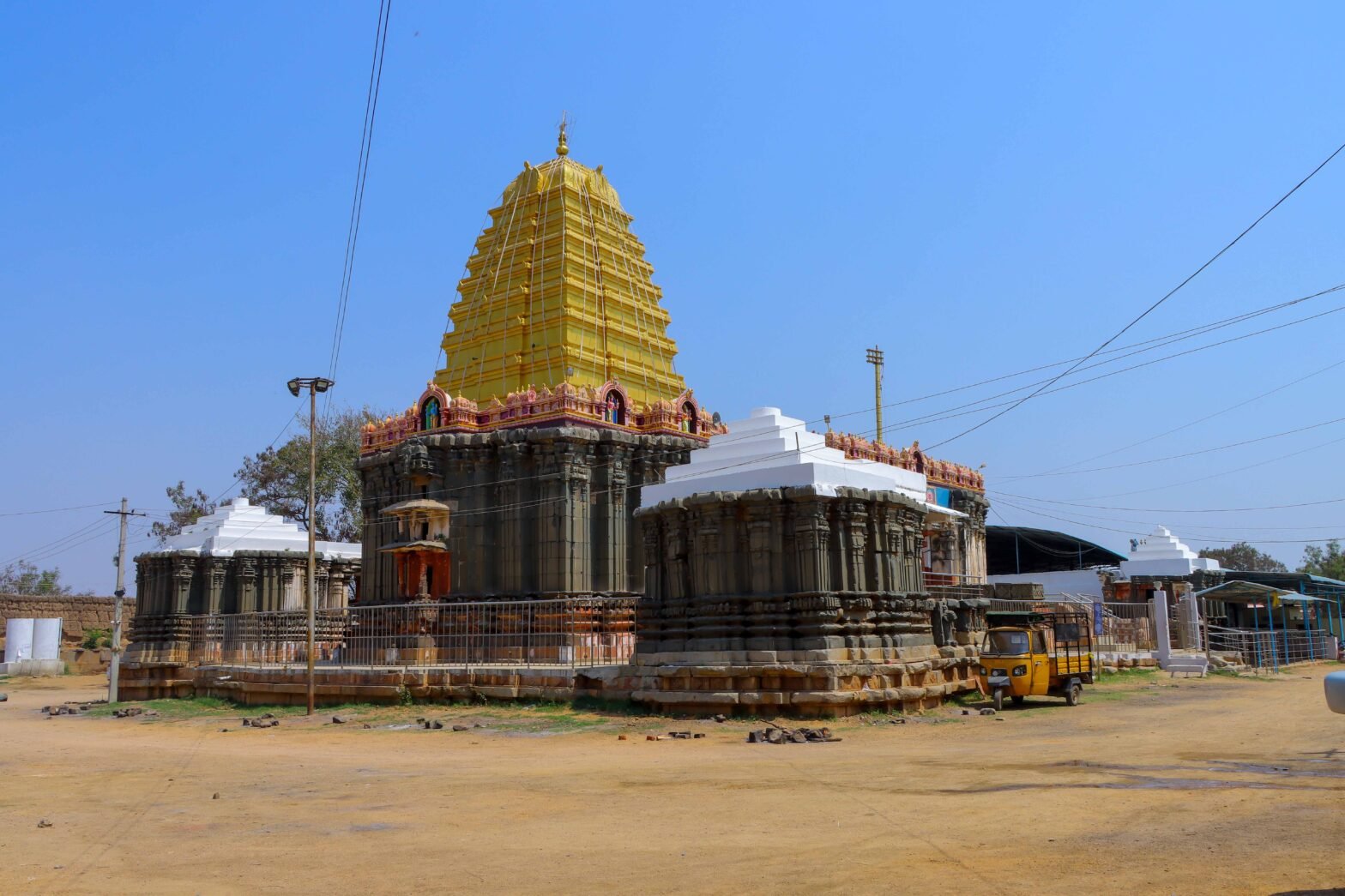
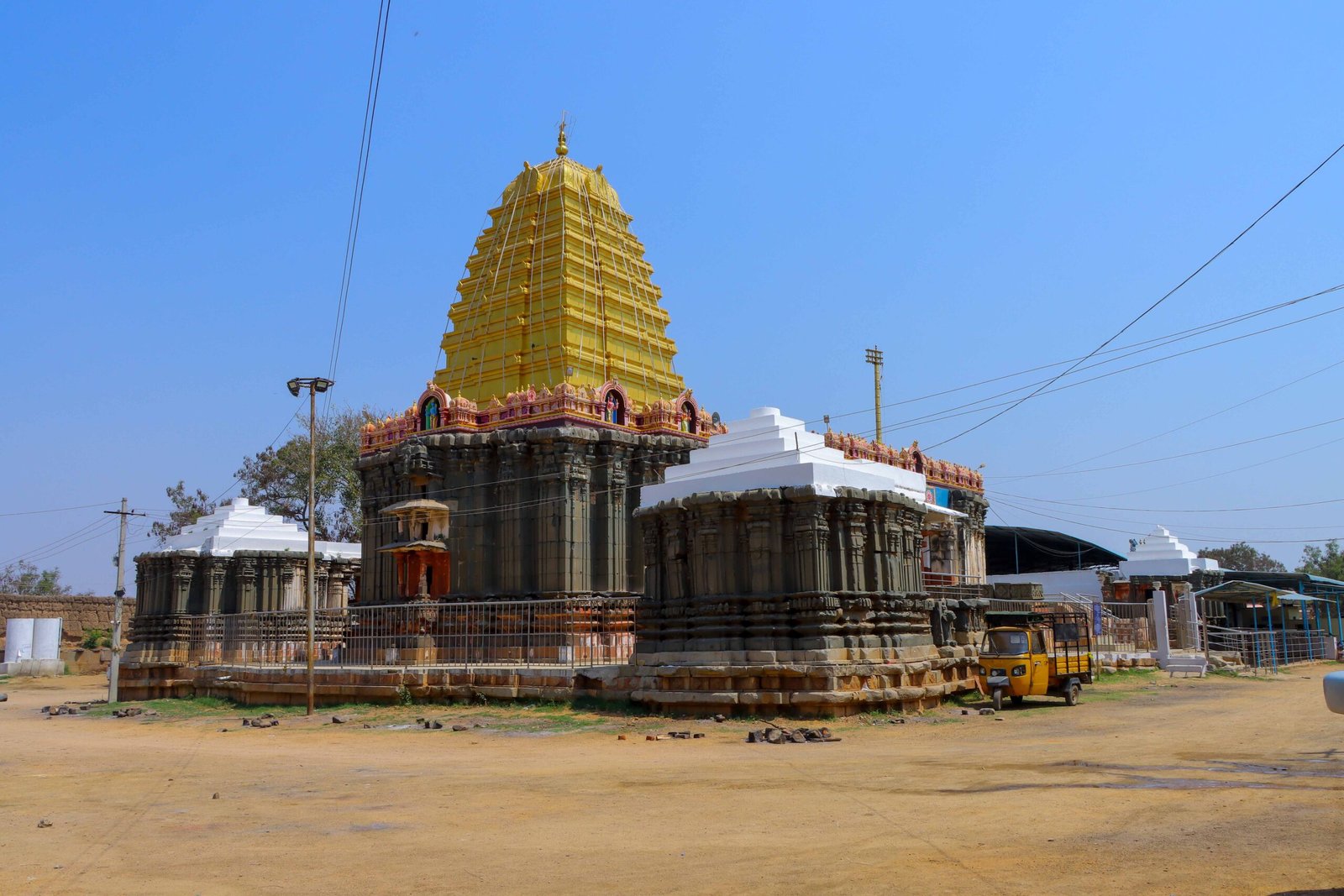
Sri Chennakesava temple is located in the Gangapuram village in Jadcharla mandal of Mahaboobnagar district in Telangana state. The village consist of several ruined temples belonging to Kalyani Chalukyan period and the Chennakesava temple is only the active and best preserved structure of that period in the village. The temple is the earliest of the Panchayatana order in both the states.
Management:
The temple is a state protected monument under Heritage department of Telangana and maintained by Endowment Department of Telangana.
Legend has it that Lord Vishnu appered here for the event of Gajendra-moskha, the story in which the Elephant was being bitten by a crocodile. The elephant prayed for the Vishnu to make him free from the pain to which the Vishnu took his Chakra and cutoff the crocodile neck. It is believed that the positions of Chakra and Shanku are reversed.
In general the name Chennakesava is formed by two words Chenna and Kesava meaning a man with beautiful hair.
Gangapuram is an important religious and administrative site during the Kalyani Chalukyan period. Prior to this, it was also a prominent Buddhist and Jain religious center. The literary works mention the ancient name of this place as Mayapuri, probably named after the Buddha’s mother Mayavati. The glory of the place is mentioned in many literary works such as Palkurti Somanatha’s ‘Panditaradyacaritra’, Mallareddi’s ‘Gangapuramahatyam’ and Poet Vemgayya’s ‘Narapativijayamu’.
There are numerous inscriptions found in the village recording the gifts made to the temple. The earliest among them belongs to the Kalyani Chalukyan ruler Trailokyamalla Somadeva I (1042-68CE) which mentions the name of the place as Trilokyamallakesavapuram and the lord as Trilokyamallakesava. There are four inscriptions of Vikramaditya VI, the greatest ruler among Kalyani Chalukyas. An inscription of him dated 1091 CE mentions the existence of the temple of Kesavaswami along with other temples dedicated to Sagareswaradeva, Komareswaradeva, Somanathadeva, Saleswara, Bhimeswaraq and Pojjiswara. There are other inscriptions registering the gifts made to the temple by the subordinates of Bhulokamalla Somesvara and Jagadekamalla, the later Chalukyan rulers. There are several other inscriptions referring to this temple in other places. As per a fragmented Sanskrit inscription found in the village refers to a king named Venna belonging to the fourth caste whom is considered according to the historians as the 14th Recharla chief who defeated a Muslim invasion over the place. In later times the place is vandalized by the Muslim rulers which is responsible for several ruins found in the village.
Architecture:
The Chennakesava temple at Gangapur is built in Panchayatana style of architecture in which the main shrine is built on a rectangular plinth with four subsidiary shrines at the four corners. The temple exhibits the architectural features of Kalyani Chalukyas which when seen from a distance, looks as built in a fortress on an elevation enclosed in two prakaras (compound walls).
The outer prakara is built of massive stone blocks and has entrances on the east and south walls. There are mud wall replacements on the prakara which are probably later added (after invasion). The east entrance is the main entrance with plain doorway attached with a mandapa of 28 pillars, inside the prakara with a passage in the centre with raised platform having pillars on either sides. The southern entrance of the prakara is in ruined state and has a 40 pillared mandapa attached to it. The outer enclosure consist of a four pillared mandapa, small shrine dedicated to Hanuman, ruined pillared mandapa and temple tank.
The inner prakara wall is short and has entrance on south, east and north. The east entrance is the main one and is built on a double platform reached through a flight of steps leading to the doorway. The second enclosure consist of main temple at the center and four smaller subsidiary shrines at four corners. There is a dwajasthamba infront of the east entrance of the temple.
The main shrine consists of garbhagriha, an antharala and mukhamandapa with entrances on the east, south and north. The main shrine is a closed with walls on all sides and consists of pilasters, projections, miniature vimana prototypes and other decorative elements. Each entrance is preceded by a porch of elevated platform reached through the flight of steps guarded by elephant trunks on either sides. The Mukhamandapa doorways are richly decorated with artistic elements on side jambs, architrave and lintels. The eight pillars in the hall cuts the ceiling into seven squares with central big square surrounded by six smaller squares. Each of the square is placed with an inverted lotus at the center. The antharala is formed by two pillars on either side without any doorway. The garbhagriha is a square chamber with four pillars fitted into wall on four corners. The outer walls of the garbhagriha have miniature shrines projected with three stories, on all three sides. There is a tall vimana (superstructure) of Nagara order on the garbhagriha, built in recent times.
The four subsidiary shrines are smaller in size built on an elevated platform, each having a garbhagriha and a mandapa before it. There are small vimanas above each of the subsidiary shrine. There are a flight of steps guarded by elephant trucks on either sides to reach the mandapa of the shrines. The doorways are decorated with dwarapalas, female chouri bearers and artistic elements.
Art & Sculpture:
The main idol in the temple, Chennakesava is carved beautifully in black stone. The image is depicted in standing pose with four arms holding Padma (Lotus), Shanka (Counch), Chakra (Wheel) and Gada (Mace). There is an icon of Lakshmi devi just infront of the main idol towards left side depicted with four arms holding lotus on hind hands and fore hands are in Abhaya and Varada mudras (hand poses).
There are two big dwarapalaka sculptures of five feet height arranged leaning against side walls on the east entrance. There are another pair of dwarapalakas on the lower corners of doorways depicted along with women on either sides. The lintel of the east entrance doorway has Gajalakshmi sculpture. The jambs of all the entrances are beautifully decorated with artistic designs.
The temple outer walls have a series of elephants running all around the temple depicted in different themes such as possessions, war and other activities. There are different males and female sculptures depicted as musians, dancers and warriors at regular intervals on a row above elephant band. There are good number of Mastya, yali and other sculptures on the same row.
The most celebrated festivals in the temple are Vaikunta-Ekadasia and Mukkoti-Ekadasi. Major Hindu festivals like Ugadi, Ramanavami and Depawali are celebrated in the temple. All holy days as per the Vaishnava Agamas are observed in the temple.
6AM – 10.30AM and 4PM-8.30PM