EXPLORE
Sri Jaganmohini Kesava Temple
-
Period : 16th Century,
Deity : Vishnu
District : Ryali, Konaseema district, Andhra Pradesh
Info:
Sri Jaganmohini Kesava temple is one of the unique temples in India as it is dedicated to Jaganmohini avathar, the beautiful female form of Mahavishnu. The temple is located in the Ryali village situated between two streams namely Vasista and Gautami, of river Godavari in Atheyapuram mandal of Konaseema district in Andhra Pradesh.
Management:
Endowments Department of Andhra Pradesh.
Legend has it that when Devatas and Rakshas were quarrelling over the sharing of the holy Divine nectar(Amritha) Sri Maha Vishnu came to the rescue of Devatas in the form of Mohini, a beautiful women and persuaded both the rival parties and promised to distribute the holy Divine nectar equally to Devatas and Rakshas. For the sake of universal harmony and the wellbeing of the wise, holy and sacred nectar was distributed to the Devatas alone, and the Mohini chopped the Rahu and Ketu, demons who drank nectar by joining into Deva troop. After this the Mohini left the scene.
Lord Siva, seeing the most fascinating beauty of Mohini, tried to attract her. On observing Siva, Mohini took on a chariot and tried to escape from the Siva. On reaching the spot, the binding nail of the chariot wheel dropped and thus Mohini has to stop the chariot. The place where the nail of Mohini’s chariot fell is called Raali, the meaning dropping of the nail in Telugu. It later settled as Ryali in time course.
A king came for the hunt in the area where he got a dream about the above event and Lord ordered to build a temple in his dream. The King ordered his servants to dig the spot as per the dream and found a beautiful stone image of the Lord. He raised a small temple above it and worshiped the Lord.
The lord here is known as Jaganmohani-Kesava, the Kesava who appeared in the form of Mohini.
The temple has its origin in around 11th century CE during the rule of Cholas of Tanjavur. The temple received patronage from various ruling dynasties of the area such as Vengi Chalukyas,Chalukya-Cholas, Kakatiyas, Reddi’s of Kondaveedu and Vijayanagara dynasties. The local chief of the area during the 17th -18th centuries also contributed to the temple in the form of gifts and donations.
The temple is modernized in the recent years and the prakara is built around the temple in 1936 CE.
Architecture:
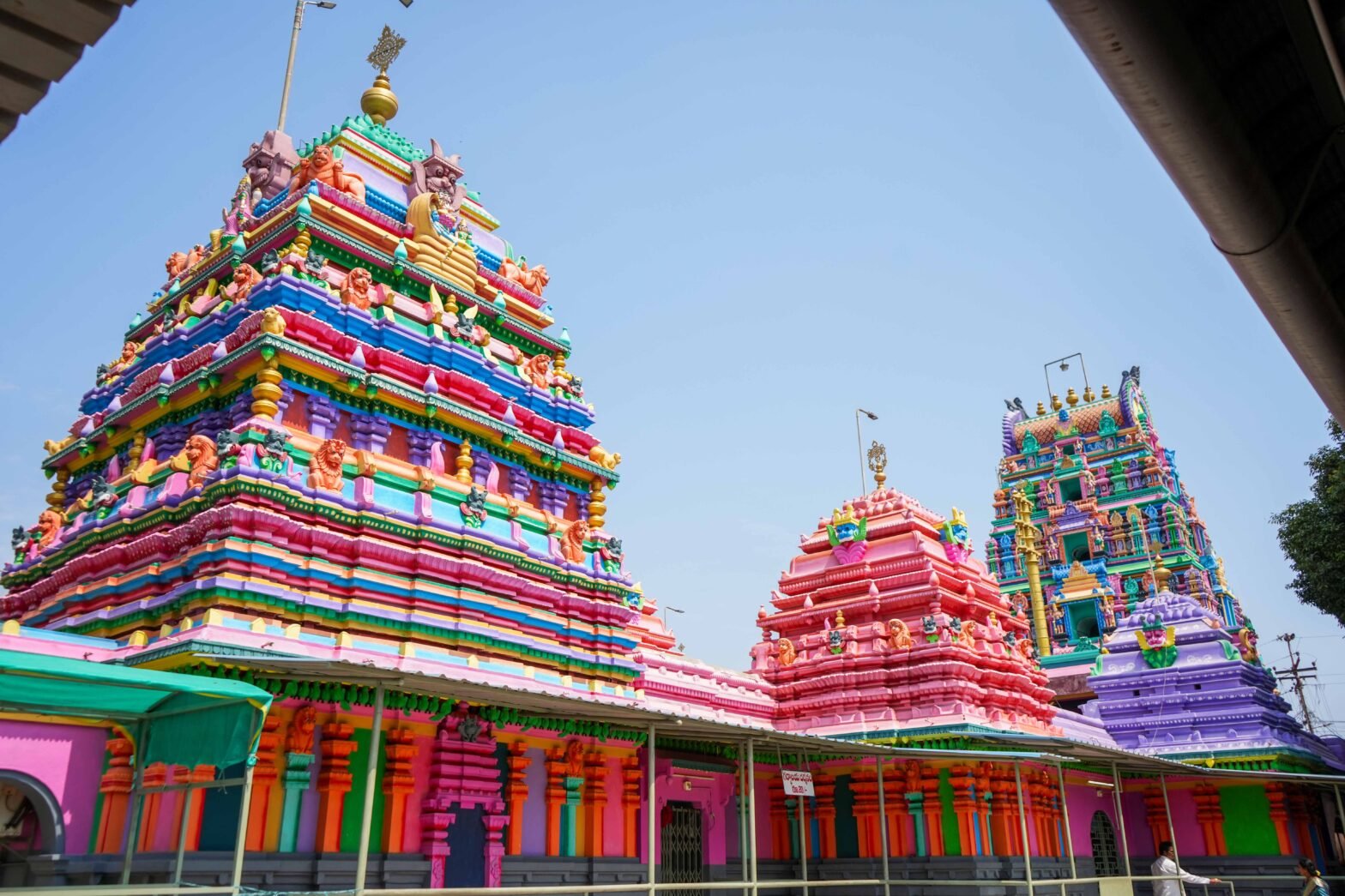
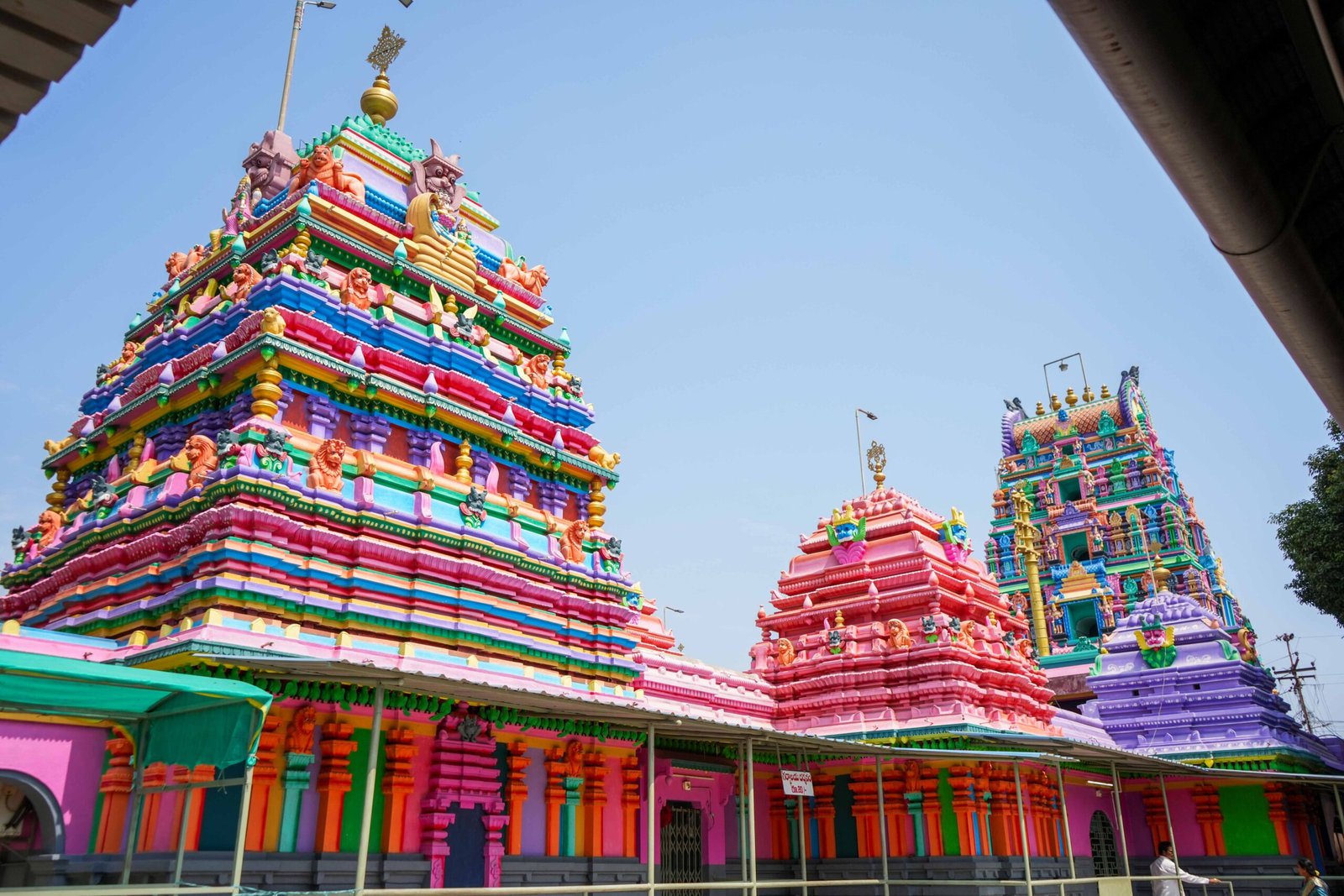
The temple is enclosed in a prakara on all four sides with the only entrance way in the east surmounted by a Gopura of four-storied structure. The main shrine consist of a Garbhagriha, an arthamandapa, a mukhamandapa and a mahamandapa built in Dravidian style. The Garbhagriha has the main idol of the Lord. The units of the temple has well moulded adistana portion i.e. the plinth.
There are modern subsidiary shrines built attached to the Mahamandapa. All the sanctums consist of a Vimana, a superstructure above the roof, built in Dravidian order.
Art & Sculpture:
The most attractive feature of the temple is the exquisite idol of the Lord, made out of black stone depicting both male and female feature in a single idol making it a masterpiece of sculptural dexterity. The lord is depicted as Kesava form on the front side with features such as four arms holding Sankhu, Chakra, Gada and Padma. The back portion of the idol is moulded in such as way depicting the female body features such as hair-bun, arm bands, slim waist and a mole on thigh of the right leg. This is one of the rarest and skilfully carved sculptures in India representing the Kakatiya art.
There are smaller carvings of Sridevi and Bhudevi, the consorts of Lord on either sides at the bottom. The frame around the Lord is also beautifully decorated with incarnate designs.
The most celebrated festivals in the temple are Vaikunta Ekadasi and Ugadi. Annual procession of the Lord on a Garuda vahana in the village is conducted on grand scale. All other festivals and holidays as per the Vaishnava Agamans are performed in the temple.
6AM-12PM, 3PM- 8PM