EXPLORE
Sri Kodhandaramaswamy temple- Vontimitta
-
Period : 12th Century,
Deity : Vishnu,
District : Vontimitta, Andhra Pradesh
Info:
The Kodhandarama temple is located in the Vontimilla a village and mandal
headquarters in the YSR Kadapa district of Andhra Pradesh. The principle deity
of the temple is Lord Rama and the temple is adopted by the Tirumala Tirupati
Devasthams (TTD) for its administration. After bifurcation of the State, the
Government of Andhra Pradesh is conducting the annual Sriramanavami
Ustavam as the state ritual which was earlier conducted at Bhadrachalam.
The Legend has it that the temple was constructed by two person’s names Vonttudu and Mittudu who were robbers belonging to the Boya community. One day, they suddenly turned into devotion and decided to leave the robbery life. They gathered people in the village to inform their transformation and expressed their will to construct a temple to Lord Rama to which the villages denied. The two men started construction by praying to the Lord and ended up finishing the construction in a day. Later they are believed to be turned into pillars in the temple on the boon of Lord. Hence the place is named after them as Vontimitta.
The history of the temple dates back to as early as 12th century CE through the epigraphic records. The original temple is believed to be constructed during the rule of Cholas which was later patronized by other ruling classes of the region until the arrival of Vijayanagaras, who expanded the temple in large scale.
Architecture:
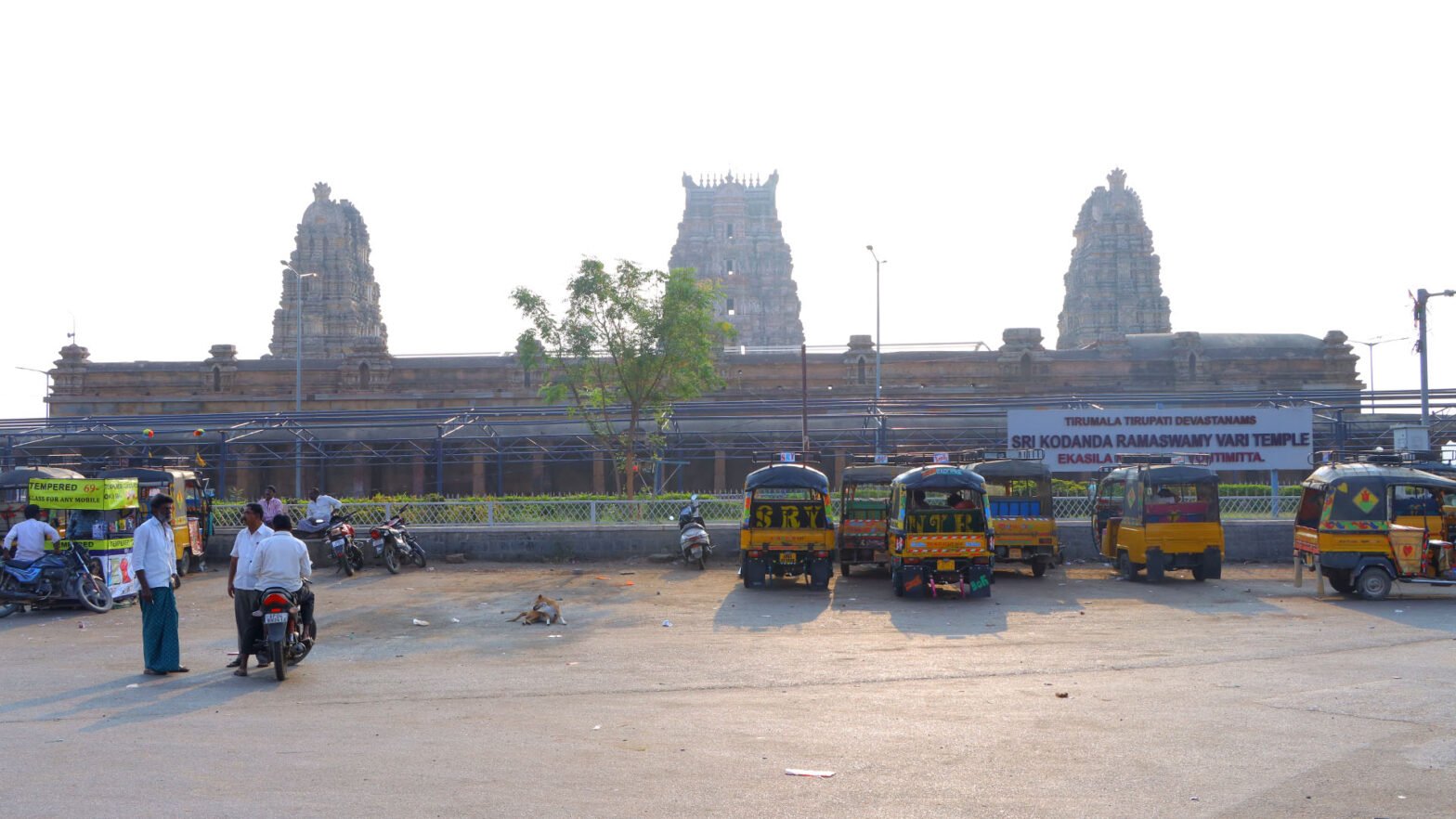
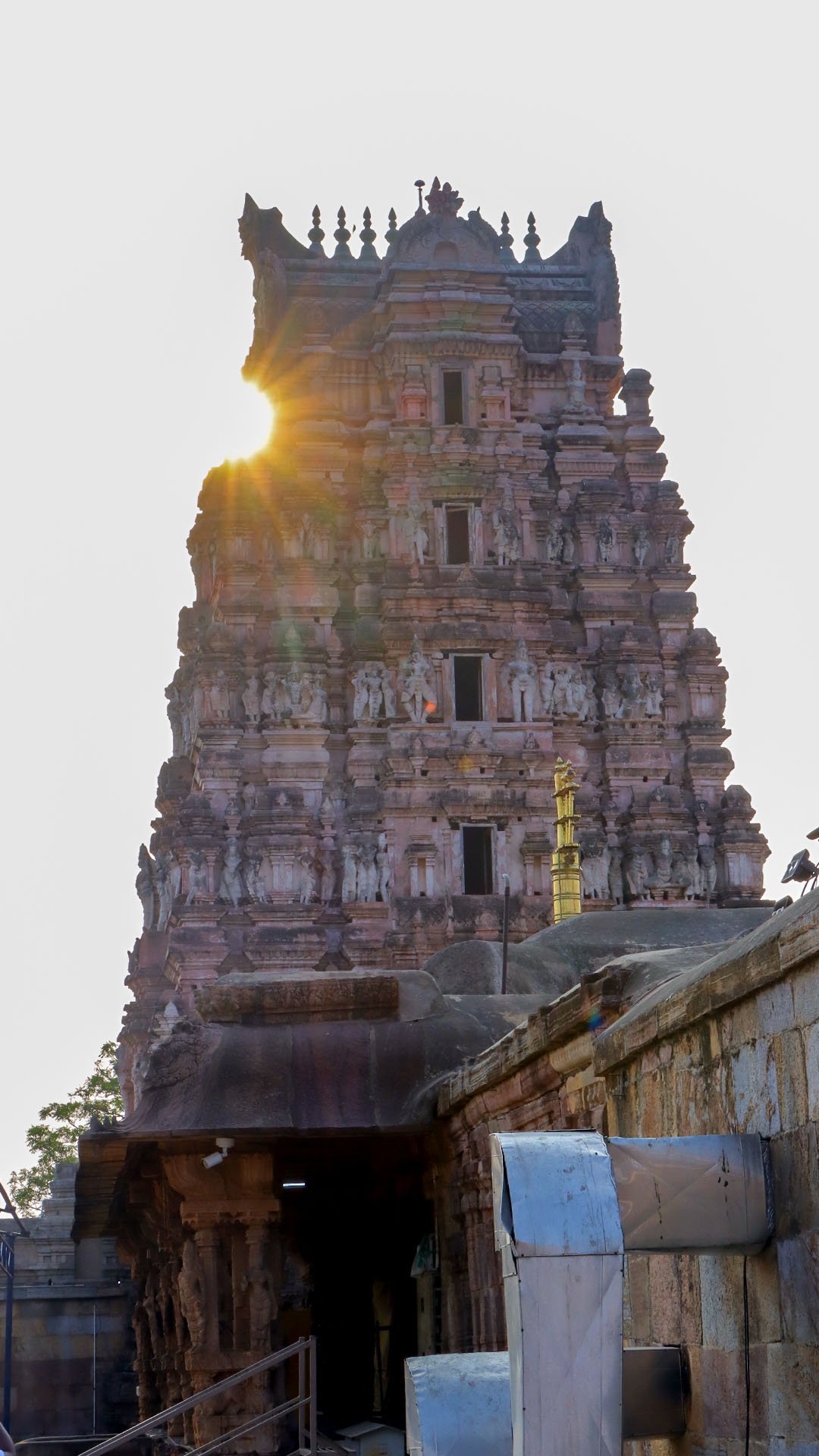
The present structure is an extraordinary example of Vijayanagara art and architecture. The temple is built in sandhra model in which the circumambulatory path is around the main chamber within the closed main structure. The temple is enclosed in a Prakara which has three entrance gateways in East, North and South surmounted by Gopurams on top of them. The East gopura is the largest among them with five storied superstructure and considered as the main entrance. The north and the south gopuras have three storied superstructure. The prakara forms an open enclosure with the main shrine at its center. The main shrine consists of a garbhagriha, an antharala, the pradashinapada (circumambulatory path), the mukhamandapa and the rangamandapa constructed on a raised platform assessed through a flight of steps. The main chamber contains the presiding deity cult at its center and a small chamber known as antharala is attached to it. Around this runs a closed passage termed as pradashinapatha. The mukhamandapa is a closed enclosure with four pillars at its center, minor chambers and an entrance doorway in the east which leads in rangamandapa. The rangamandapa is an open pillared hall which consists of pillars in six rows and projection in the east. There are a total of twenty eight pillars in the mandapa. There is a Kalyana-mandapa in the south-west corner of the open enclosure with four rows of four pillars each.
Sculpture:
The temple exhibits the rich artistic features of the Vijayanagara art. The main attraction of the temple are composite pillars and narrative panels. The icon of main deity is Kodandarama, who is seen holding a bow in one hand and an arrow in the other hand accompanied by Sita, his consort and Lakshmana, his brother. The bas relief is carved out of a single stone on which Rama, Sita and Lakshmana are present. The door-jambs of the main chamber and mandapa has the carvings of Dwarapalakas. There are carvings of Vishnu, Krishna, Devi, Kodandarama, Bhairava and Narasimha on the pillars of Mukhamandapa. The rangamandapa holds the most beautiful and ornate pillars which include the composite sculptures on pillars. The pillars include the figures of Vishnu avatars such as Matsya, Kurma, Narasimha, Rama and Krishna. There are figures of Vishnu, Sridevi, Bhudevi, Kodhandarama, Lakshmana, Kaliyamardhana, Vatapatrasai and Govardhanadara. The pillars also include the female dancers, horseriders and Yali figures. The prakara gopuras has the narrative panels on the walls of the entrance doorways. The east gopura has the beautiful narrative panels which depict the various scenes of Ramayanam. There is a panel depicting the marriage event of Sita-Rama accompanied by Janaka, the father of Sita in which Rama is seening knotting the Mangalasutra to Sita and next to it has the depiction of the Tarambralu scene between Rama and Sita in which at first Rama is pouring the sacred rice on Sita followed by Sita trying the same but felt shorter to which Janaka arrange a stool to match the height of Rama.
The most celebrated festival in the temple is the Srirama Navami which was celebrated on a grand scale and the Sita-Rama Kalyanam is performed as the official ritual of the State of Andhra Pradesh. The annual Brahmostavam is also conducted in the temple. The other celebrated festivals in the temple are Vaikuntaekadasi, Ugadi and Sivaratri along will all auspicious days of the Vaishnava agama are conducted here.
5:30AM -9PM