EXPLORE
Tripurantakeswara Temple
-
Period : 10th Century,
Deity : Shiva
District : Tripurantaka, Prakasham district of Andhra Pradesh.
Info:
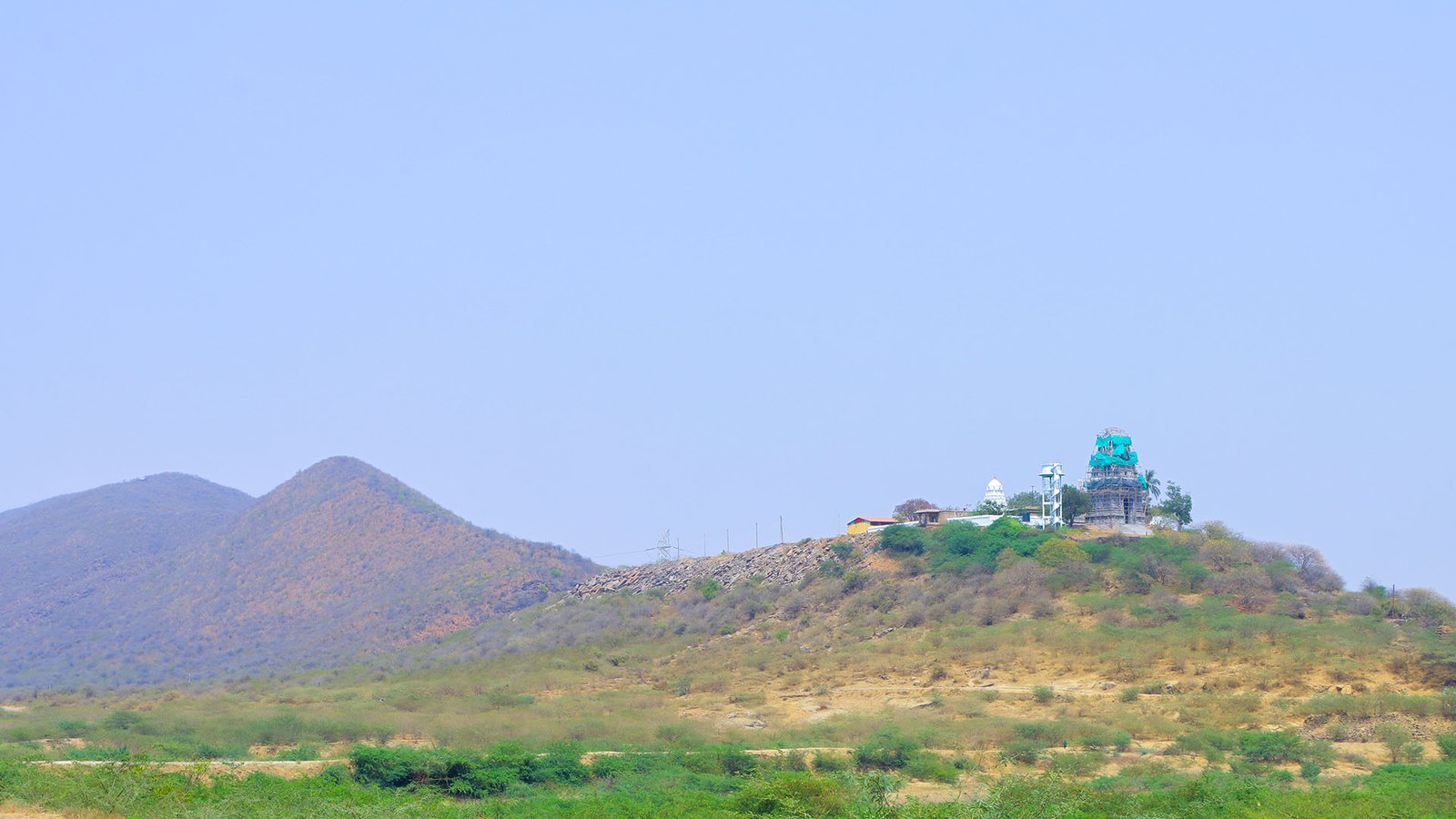
The Tripurantakeswara temple is situated on a small hillock named Kumaragiri
in the Tripurantakam village in Prakasham district of Andhra Pradesh. The
temple is dedicated to Lord Siva in which the presiding deity is
Tripurantakeswara. Tripurantakam is considered as the eastern gateway of
Srisailam, a prominent Saiva site. Tripurantakam also consists of
Bala-Tripurasundari shrine at few yards from the foot of the hillock.
The legend has it that the demon Tarakasura had three sons named Taarakaaksha, Kamalaaksha and Vidyunmaali. On the death of Tarakasura, these demon princes seeking revenge performed severe penance towards Lord Brahma and obtained immense power. Lord Brahma, being pleased with them, presented each one of them an aerial city which revolved in the sky for hundreds of years, rarely converging. Brahma gave them the boon that they would live for a thousand years in the three invincible, flying cities and that they would be destroyed only by an arrow that could merge the three into one, and set them to fire. The demons, armed with the boon, wreaked havoc on the universe. Entrenched in their aerial cities, they would mount attacks on devas and rishis, harassing them. Ultimately, the gods and the sages approached Siva and pleaded for his assistance in removing this menace. Lord Siva agreed to help them and seek the assistance of Lord Vishnu and Lord Brahma. They all waited for an opportune moment in which the three cities align in a line, on the moment the Vishnu ordered Viswakarma, the architect of Devas to make a chariot using earth as body and sun-moon as wheels and bow made with mount Meru as arc and Vasuki, the serpent as string to it. Lord Brahma became the charioteer and Lord Vishnu became the arrow. Lord Siva climbed the chariot and aimed at those cities floating in air and is aided by goddess Sakthi as
Balatripurasundari to immense her power into the bow. The arrow was released at the three cities which resulted in burning down them into ashes. Hence Siva is hailed as the Tripuranatakeswara, the destroyer of three cities. After the destruction, Lord Siva self-manifested himself at this place and hence the place was named after him as Tripurantakam. The Goddess Balatripurasundari also manifested her-self few yards away from the foot of hillock, the adorn of Lord Tripurantakeswara.
The history of the temple dates back to around 10th century based on the literary sources which mentions the Tripurantaka as the eastern gateway to Srisailam. There are epigraphic sources about the donations made to the temple during the rule of Velanati Chodas and their successors ruling the area. The temple obtained prominence from 12th century CE under the patronage of the Kakatiyas of Warangal. According to an inscription dated 1255 CE the temple was built in stone by Santanasambu, the son of Visveswarasivacharya, the chief priest of Kakatiya during the rule of Ganapatideva. There are inscriptions dating between 12th and 14th century issued by several local chiefs and officers which registers about the donations made to the temple. Melambika, a sister of Ganapati deva built a shrine dedicated to Siva and named after her as Melambeswara. There are around 115 inscriptions in the temple which registers about various donations and events issued by several rulers and officers. The chiefs such as Kota, Chagi, Natavadi, Kondapadamati and Kayastha also made donations to the temple which are asstedted by their incriptions. The Tripurantakam also received patronage from Reddies of Kondaveedu and Vijayanagaras. The temple was renovated in the rule of Vijayanagara and new pillars were added to the structure. The inscription in the temple also gives us a light on the activities in the temple such as the appointment of priests, saints, musicians, dancers and cooks. The inscriptions also mentions about the establishment of choultry with feeding facility to the pilgrims was conducted.
Architecture:
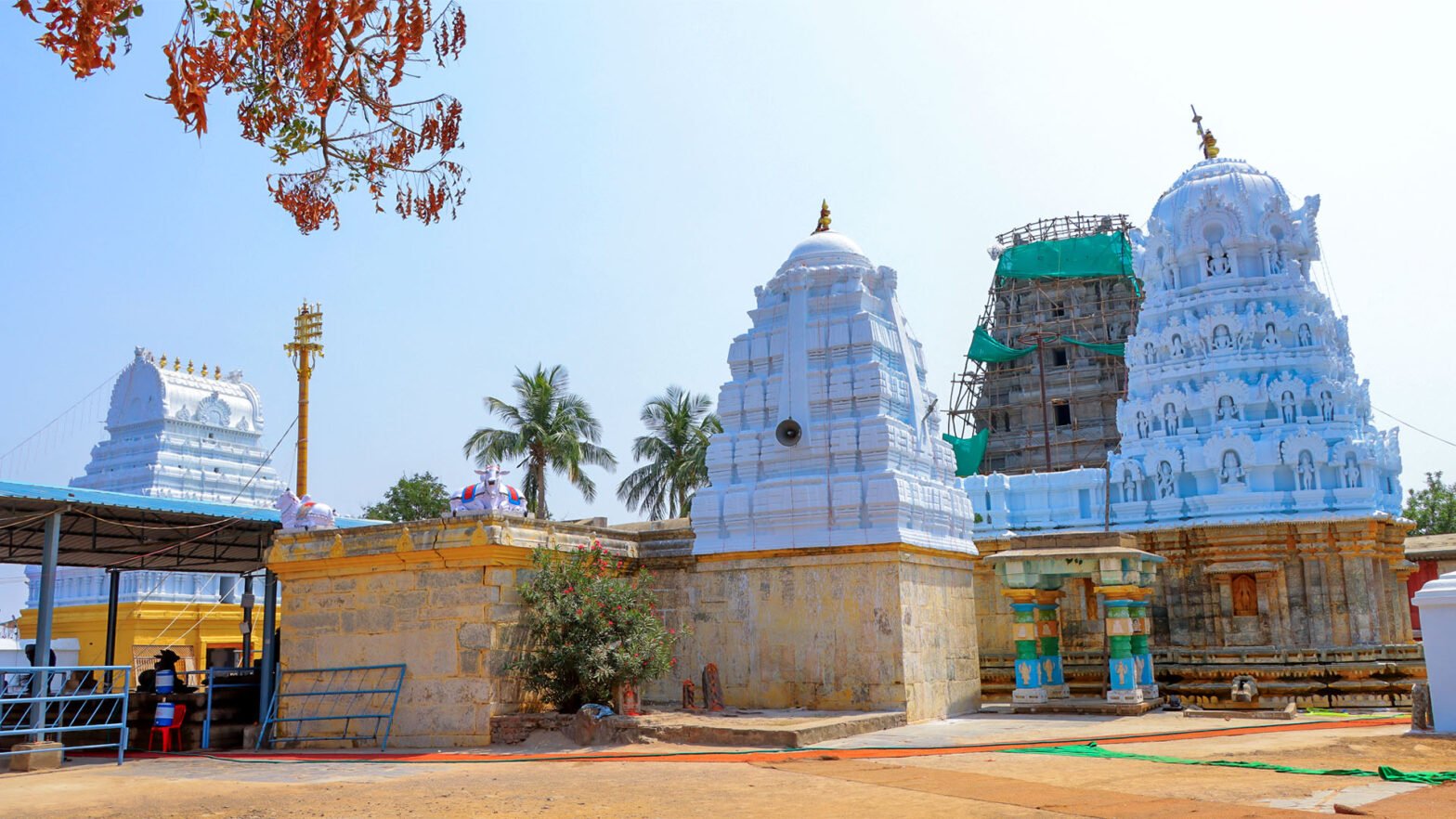
The temple is reached through a flight of steps from the foot of the hillock. The temple is enclosed in a Prakara with four entrances on four directions out of which the east entrance is the main entry and is surmounted by a superstructure.
The main shrine is at the center of the courtyard consisting of closed structure with entrance on south side. The main shrine consists of a garbhagriha, an arthamandapa and mukhamandapa. There is a super structure of three stories above the main chamber. The Devi shine is adjoined within main shrine assessed through the mukhamandapa which consists of a garbhagriha and an arthamandapa. The mukhamandapa consists of pillars inside and is closed by walls on sides and consist of perforated windows on sides allowing the air and light to pass through. The plinth of the temple exhibits the architectural features of the Kakatiyas. There is a closed structure called as Chikati-koneru in the south-west corner of the courtyard which has an entrance mandapa with two pillars consisting of Lion capitals. The entrance leads into a chamber which opens into a dark hall which is believed to contain an underground passage leading to Srisailam. The hall was now closed. Beside this there is an open mandapa on an elevated platform which consist of an idol of Lord Ganesha. There are three miniature shrines behind the Main shrine in which one is dedicated to Chennakesava and other two are dedicated to Siva. Two open four pillared mandapas are present on either side of mukhamandapa of the main shrine. The Dwajastamba is in between east gopura and main shrine and Nandi-pillar is placed on a platform next to main shrine on south-west side.
Sculpture:
The temple consists artistic features as icons of gods carved on the niches of temple walls and panel carvings in mandapas. The outer walls of central shrine consist of icon of Ganapati depicted standing with his leg resting on mushika,
his vehicle, the icon of Mahisasuramardini depicted killing the demon and assisted by lion and the Lingodbhava, in which Siva is depicted emerging from the linga. The Dwarapalakas of the main chamber are of life-size icons with four arms and standing in cross-legged pose. The large icon of Ganesh in the outside mandapa depicted in Seated pose is attractive and is surrounded by few panels depicting various carvings such as scene of Tripurantaka-vadha in which Siva is seen holding a bow and an arrow in his fore-arms assisted by Brahma as charioteer and Devi is seen holding bow which signify the transfer of energy into the bow. The three demons are depicted in three circles depicting the three aerial cities. On anthor panel Siva-Parvati are carved sitting together. There are carvings of Ganesh and Kumara on the left of this panel. In another panel there is a carving of Baktha Kannappa who is depicted placing his leg on ligna and trying to pull out his eye with an arrow. There are carvings of dancers, musicians and animals such as elephants, swans, and bulls. The most interesting carving is the optical illusion figure of an elephant and a bull with common head carved on the eastern entrance mandapa. The inscription pillars also contains artistic features with miniature carvings and one particular inscription pillar is shaped as sword.
The main celebrated festival in the temple is Sivaratri on which Kalyanostavam is performed along with various ritual activities. All the holy days as per the Saiva tradition are conducted in the temple.
5.30AM- 11AM, 3PM – 7PM