EXPLORE
Ramalingeswara Temple
-
Period : 11th Century,
Deity : Shiva
District : Nandikandi, Sangareddy district, Telangana
Info:
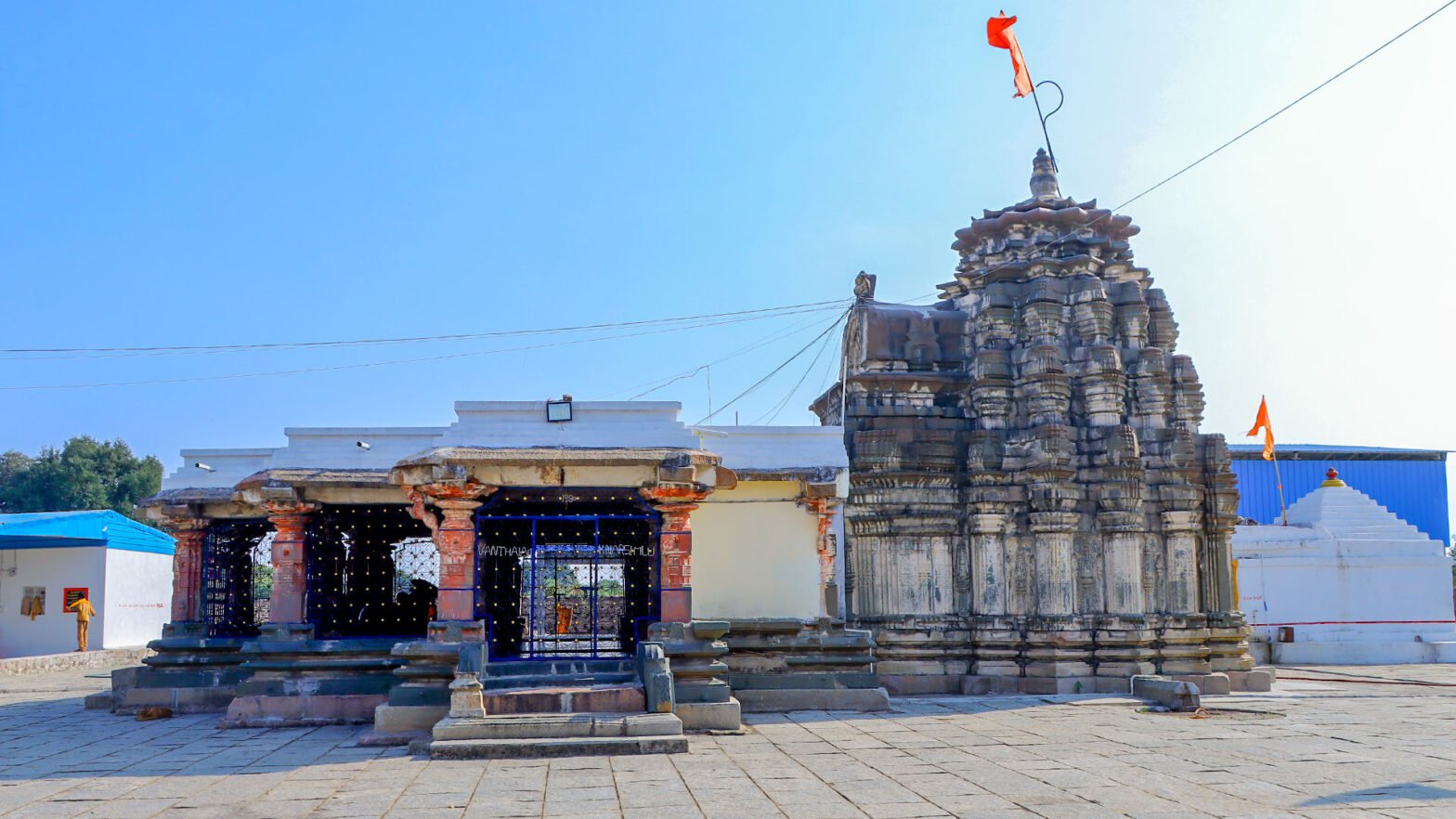
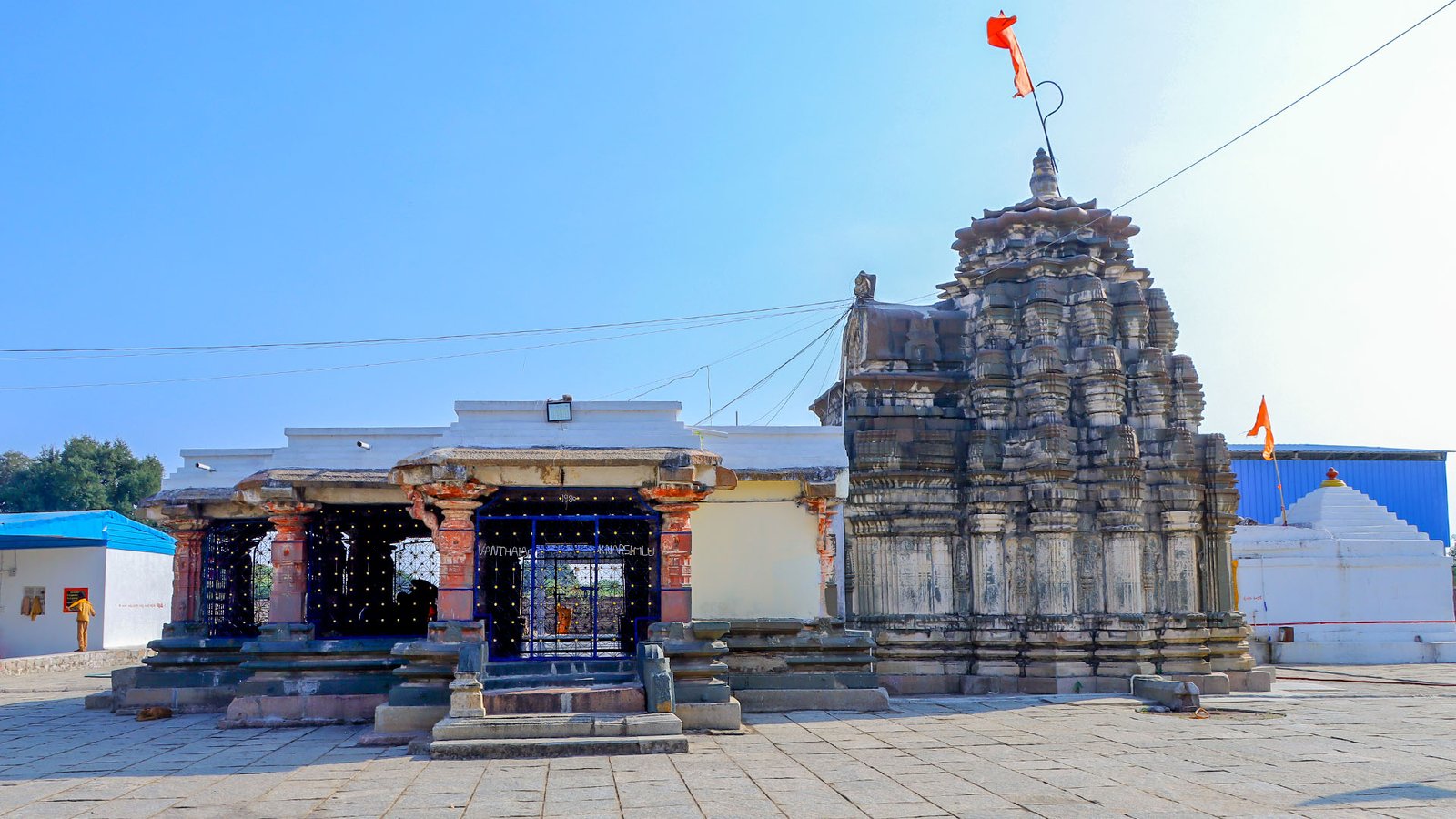
Ramalingeswara temple is located in Nandikandi village in Sadasivpet mandal of Sangareddy district in Telangana state dedicated to Siva on the route between Hyderabad and Bidar. The temple is a fine Kalyani Chalukyan temple with unique architectural feature called Bhumija in which the entire temple is on star shape.
Management:
It is a protected monument under Department of Heritage Telangana and maintained by Endowments department of Telangana.
The temple is built by Kalyana Chalukas in 11th century CE who declared independence after the downfall of the Rastrakutas. The inscription on the pillar dated to 1014 CE in front of the temple registers the gift of a village named Kovvuru for the maintenance of the temple and endowment made for running a Vedic school and for feeding the students.
Architecture:
The temple is an example of Bhumija form. On plan it star shaped from its bottom to the top seeming as if evolved from the ground. There is a Torana arch which acts as entrance gateway. There is a shed that house the temple car (Ratha) on the south side of the entrance gate.
The main shrine consist of Garbhagriha, an Antharala and Mukhamandapa. The Garbhagriha walls are designed with numerous projections on the outer side and the Vimana over its top is formed by storied superstructure designed with projections on the edges, the Garbhagriha and the Vimana together forms as star shape. The antharala is a small rectangular room connecting the garbhagriha with the Mukhamandapa. There is a small superstructure over antharala known as Sukanasi which is projected from the Vimana.
The Mukhamanda is an open pillared hall with three porches on the east, north and south side connected by steps to enter. The four central pillars of the mukhamandapa are the most attractive architectural members of the temple for their peculiar fluted design. The pillars belong to the Vardhamana and Chitrakantha type having vyalas at the top as bracket figures. There is a low elevated platform connecting these four pillars forming the Rangamandapa. The ceiling of the rangamandapa is formed of two squares place one over the other and topped by a roof slab.
There are two small subsidiary shrines containing Lingas on the west side behind the main shrine consisting garbhagriha, arthamandapa and small stepped pyramidal superstructure. There is an inscribed deepastambha infront of the main shine.
Art & Sculpture:
The temple displays the sculptural features of the Kalyani Chalukyas. The main Linga in the garbhagriha is made out of granite and highly polished. There is an icon of Ganesha in the mukhamandapa depicted in seating pose with four arms.
The central four pillars made out of black stone are beautifully carved with numerous sculptures on different sections of the pillar from the top to bottom on all the faces. The sculptures include the carvings of Surya, Devi, Siva, Nataraja, Dancing Ganesha, Saraswati, Mahisasuramardini, Varaha killing Hiranyaksha, Narasimha killing Hiranyakasipu, Bhiskatana murti, Bhu-Varaha, the carvings of Elephant and Horse riders, musicians, dancers, yali and also a miniature prototype of the temple. The other pillars in the mandapa also consist of similar type of sculpture carved on their side faces.
The Life-size Dwarapalakas depicted with four arms standing in cross-legged pose are more attractive. The doorframe of the Antharala is decorated with a pair of male and female figures on either side on the lower section. The lintel of the doorframe has Gaja-laxmi sculpture and the beam above this lintel has carvings of Siva attending by females. The monolithic Nandi in the mukhamandapa is highly polished and ornate.
The Torara decorated with flat makara design with buds at regular intervals on the underside. The granite block placed above the Torana arch has beautiful carving of Nataraja depicted with eight arms and dancing on dwarf demon on the east face and the sculpture of Gaja-laxmi on the west face.
The temple consist of several sculptures found in the temple premises, now placed in the museum hall lying in the south of courtyard and on platforms arranged beside entrance gate.
The Major days celebrated in the temple are the Sivaratri and Kartika-purnima. All other auspicious days as per the Saiva agamas are performed in the temple.
6AM – 6PM