EXPLORE
Kapotheswara Temple
-
Period : 4th Century,
Deity : Shiva
District : Chejerla, Palnadu District, A.P.
Info:
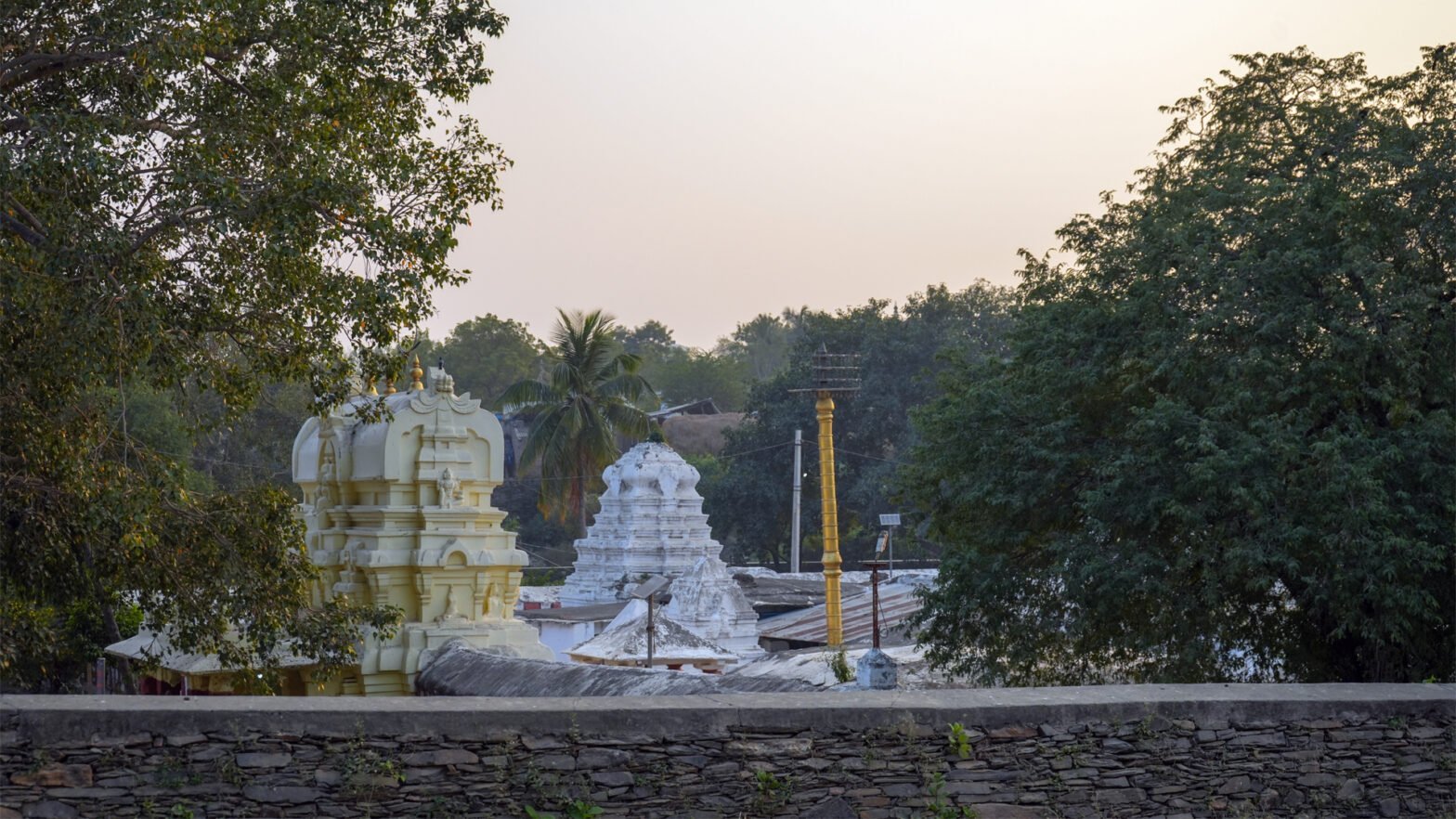
Kapotheswara temple is located in Chejerla village in Nakarikallu mandal of Palnadu district in Andhra Pradesh. The temple is dedicated Lord Siva in the name of Kapotheswara derived from word Kapotha meaning Pigeon.
The temple is one among the earliest surviving and active brick temples in the country and has prominence among archaeologists and historians for the study on development of temple architecture in India.
Management: Archaeology Survey Of India(ASI) and State Endowments Department.
Legend attest the place to the story of Sibi, the most admired philanthropist emperor in Indian literature. Interestingly the Story of Sibi has great prominence in both Hindu and Buddhist literature. In former the story is mentioned in Mahabharata and in later it was mentioned in Jataka stories.
Legend has it that Sibi, the son of Mandhata and ruler of Kashmir has two brothers named Meghadambara and Jeemuthavahana. Meghadambara along with 1500 men had undertaken a pilgrimage and reached Chejerla, met yogis praying Linga on the hill and did a penance with them and passed away. Jeemuthavahana came in search of his brother, came to know about the place and did penance and passed away. Sibi on hearing the news reached the spot and decided to perform 100 yagnas over there. The yagnas were being performed on a grand scale and soon the news reached all over the world. The Devas requested the Trinity to test the Sibi’s earnestness. During the 100th yagna, Siva assumed the form of a hunter, Vishnu assumed the form of Kapotha (Dove/Pigeon) and Brahma assumed the form of a bow. The hunter stared chasing the bird and hit it with an arrow to which the bird got injured and fell in the lap of Sibi, who is performing yagna. The bird sought Sibi’s protection, to which the emperor assured the bird that its life will be protected from any danger. Soon, the hunter reached the spot and requested the emperor to hand over his hunt (bird) to which the emperor denied. The Hunter claimed that it was unfair to hold his hunt as it is part of his livelihood and questioned the philanthropic nature of the emperor. Sibi offered many items for sparing the bird, but the Hunter denied all. Sibi finally offered his own flesh equal to the weight of the bird, he ordered his men to arrange a weighing scale to place dove on one side and started to cut his flesh to place on the other side. The scale stayed still even while being placing more and more flesh cut from the Sibi’s body. Astounded by the scene, Sibi decided to cutoff his head in order to balance the weighing scale and did so. When Sibi chopped his head with the sword, the Trinity revealed their original forms and were pleased for the Sibi’s action. The Trinity appreciated Sibi’s earnestness and told him that they performed this test to make everyone to know about Sibi’s nature and also that his name will be marked as synonym for sacrifice.
Lord Siva granted a boon to Sibi, to which he requested to manifest himself as Linga at the spot marking the event. Siva accepted his request and manifested himself as Linga with several groves on the surface resembling the parts scarified from the body of Sibi. As the incident happened to save the Dove from hunter, the lord here is named after the dove as Kapotheswara.
The temple is one of the earliest surviving brick temples in India. The excavations conducted around the temple shows the underlying basement built of bricks dating back to third or fourth century CE. The temple is believed to be a Buddhist site before conversion into Saivate temple. Though there are no clear evidences about the origin of the temple, scholars believe that the temple received patronage from the period of Anandhagotris, who ruled over the area in 4th century CE. Later the continued to receive patronage under dynasties that came into power such as Pallavas, Eastern Chalukyas and so on until the Vijayanagara period.
The epigraphy sources (available in the form of inscriptions) throw us some light on the history of the temple. The inscription slab found in the temple has engraved on both sides in which the one dates back to 6th century CE issued by well-known Pallava king, Mahendra Varman I (600-630 CE) registering the gift made by him to god Kapotheswara. The other side of the slab has an inscription belongs to a person who claimed himself as the grandson of Anandagorika king, Kandara. The inscription reads as the King Kandara fought many elephant battles at Dhanyakataka (Now Amaravati) causing widowhood to many women of Andhra area and became the Lord of Trikutaparva and Kandakapura.
Another inscription belonging to 7th century CE issued by Visamasiddi, who has been identified with Vishnuvardhana I, the founder of Eastern Chalukyan dynasty records the gifts made to the temple. Two inscriptions dated to 1163 CE and 1274CE respectively recording donations states that the Kapotheswara is in the midst of 4444 Lingas. There are two other inscriptions registering the gift made to the god dated in 1147 CE and 1165 CE.
Architecture:
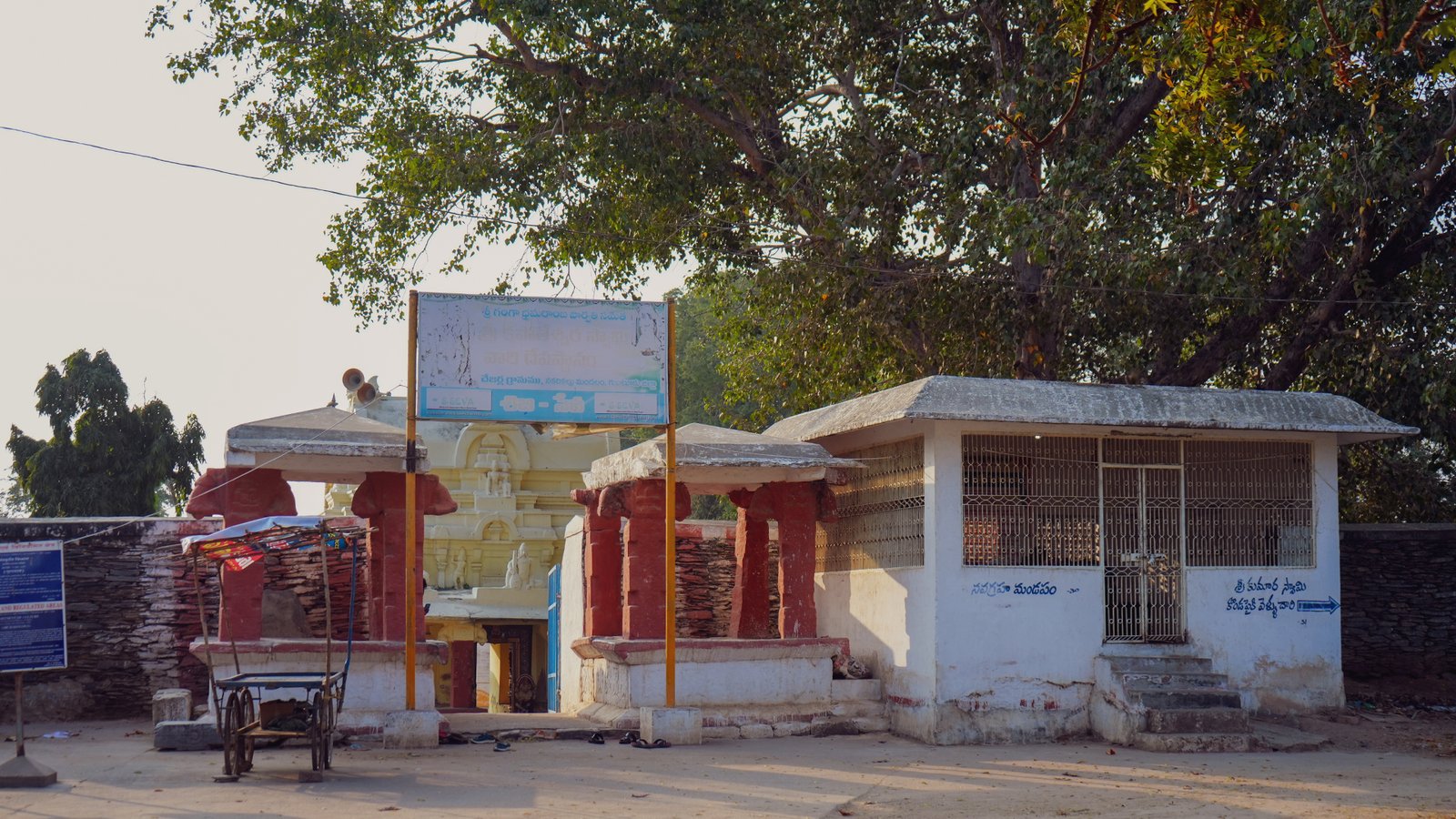
The Kapotheswara temple has great importance in terms of its architectural features. The main sanctum is built in apsidal ground plan. The temple by enclosed in two prakaras (compound walls) with the only entrance on the east attested with a modest Gopura (temple tower). The gopura represents Pallava model as in Kanchi with pillars and pilasters of the doorway having simple bracket capitals. The gopura opens into a courtyard which consist of several subsidiary shrines and stone-cut votive shrines. All the subsidary shrines consists of garbhagriha with a low Vimana (superstructure) with a Linga installed inside.
The main structure is located in the center of the courtyard which consists of a Garbhagriha, antharala, Mukhamandapa and a Nandimandapa. The Garbhagriha is the main attraction of the temple for its plan known as Gaja-pristha shape meaning elephant back portion. The shrine has a small nandi mandapa in the front connected to the mukhamandapa with a narrow rectangular mandapa with two pillars in the front and four pillars on back row forming a dwara (entrance) in the center. Beyond is a square Mukhamandapa containing two rows of two pillars each at the center and opens into inner shrine on the west through small dvara. There is a narrow compartment enclosed with wall on four sides and opens into the main chamber through an entrance in the west wall. The main sanctum is in the shape of an apse on rear end and has walls on north-south faces and over them is a false roof made of stone slabs.
The outer portion of the apsidal Garbhagriha consists of a plain walls and consists of a Gaja-prasta vimana matching the lower structure. The front side of the vimana consists of Horse-shoe shaped niche with a Lion gable.
Art & Sculpture:
The main Linga installed in the temple is made up of Lime stone and has several groves on its surface. On the top surface there are two large holes in which the right hole holds water all the time whereas the left hole drains in any quantity of water poured into it and often claimed by the priests that a rotten smell is observed regularly from the Linga as it is believed to be the torso of Sibi. The Kapotheswara temple vimana front portion consists of stucco figures of Siva-Parvati seated on a bull at the center assisted by attenders on both sides. There are stucco images of dove, hunter and king performing yagna which depicting the legend of the temple. The wall of the shrines are plain with no sculptures. There several loose sculpture and minature votive shrines scattered all over the premises (mostly in damaged state) mostly made out of limestone undergone corrosion during course of time.
There is sculpture of Ganesha in the main shrine is believed to be the one of the earliest Ganesha sculptures in the country. It is depicted with two arms in seated pose with right leg holded and supporting right arm. There is a sculpture of Surya perhaps the earliest representation in Telugu states. The image is carve on a lime stone slab depicted in standing pose holding Lotus in both hands. The drapery, crown and padded boots represent some north Indian influence. There are two slabs carved with 1000 miniature lingas on the surface among which the lime stone one is the country’s earliest Sahasralinga datable to the 4th century CE. Some loose sculpture of Devi, Sapthamatrikas and others are found sunken into the ground in the premises.
The most celebrated festivals in the temple are Sivaratri, Toli-Ekadasi and Kartika pournami. Toli-Ekadasi is celebrated in memory of Sibi’s sacrifice. All other holy days as per the Saiva agama are performed in the temple.
6AM-1PM, 3PM-8.30PM