EXPLORE
Kumarabhimarama Temple
-
Period : 9th Century,
Deity : Shiva
District : Samarlakota, Kakinada district, Andhra Pradesh
Info:
Sri Bhimeswara temple at Samarlakota, one among the Pancharamas, five sacred places dedicated to Lord Siva is located in the town of Samarlakota in Kakinada district of Andhra Pradesh.
Management:
Archaeological Survey of India (ASI)
Legend has it that a demon king named Tarakasura, obtained a boon from Siva and waged a war on Devas. The war between Indra, King of the Devas, and the demon Tarakasura raged for ten thousand years. Indra lost the battle to Tarakasura and sought the help of Vishnu, who advised Indra to pray to Siva, as the demon had attained the boon from Siva. Siva was reluctant to kill Tarakasura as he was his ardent devotee. Instead, he deputed his elder son Kumara swamy to lead the Army of the Devas. Tarakasura wore Siva Lingam around his neck and hence was invincible. On the advice of Vishnu, Kumara Swamy used the Agni Astra to break the Siva Lingam worn by the Demon. When Kumara Swamy killed Tarakasura, broke the lingam into five pieces and they started re-uniting again. To prevent reunification, Indra, Surya Deva, Chandra Deva, Vishnu, and Kumara Swamy, established the Lingam with great devotion in five different places now being called as Pancharama Kshetras. Later, Kumaraswamy killed the demon Tarakasura and brought victory to the Devas.
Later, Kumaraswamy took one piece and built a temple and installed the Lingam and named it after him as Kumarabhimeswara and thus this place is named as Kumararam.
Among the Pancharama temples, Samarlakota- Kumarabhimeswara temple is the only temple that consist of inscriptional evidence about its construction. The undated inscription found in Pithapuram village in East Godavari district mentions that Chalukya Bhima I (897-922CE) built a shrine at Chalukya-Bhimeswaram and named the Lord after him as Bhimeswara. Though there are no inscriptions of him engraved in the temple, there is a sculptural panel in which a Royal pair is portrayed in two scenes. The first consist of the arrival of couple with Horse and Varaha (Boar) and the second shows the seated couple, in which the male is seen holding Raja-danda. Both this depict the mark of Royal pair attending the inauguration of temple. Scholars identify the pair as Chalukya Bhima I and his chief queen.
The temple received patronage from the subsequent rulers of the dynasty and later underwent expansion and renovations under various ruling classes such as Kakatiyas, Reddies, Eastern Gangas and Vijayanagaras. The local chiefs, generals and royal woman of different period also contributed in the maintenance and gifted lands to the temple.
Architecture:
The architecture of the Kumarabhimeswara temple consisting of a double storied central shrine and resembles to that of Drasharamam temple in all aspects.
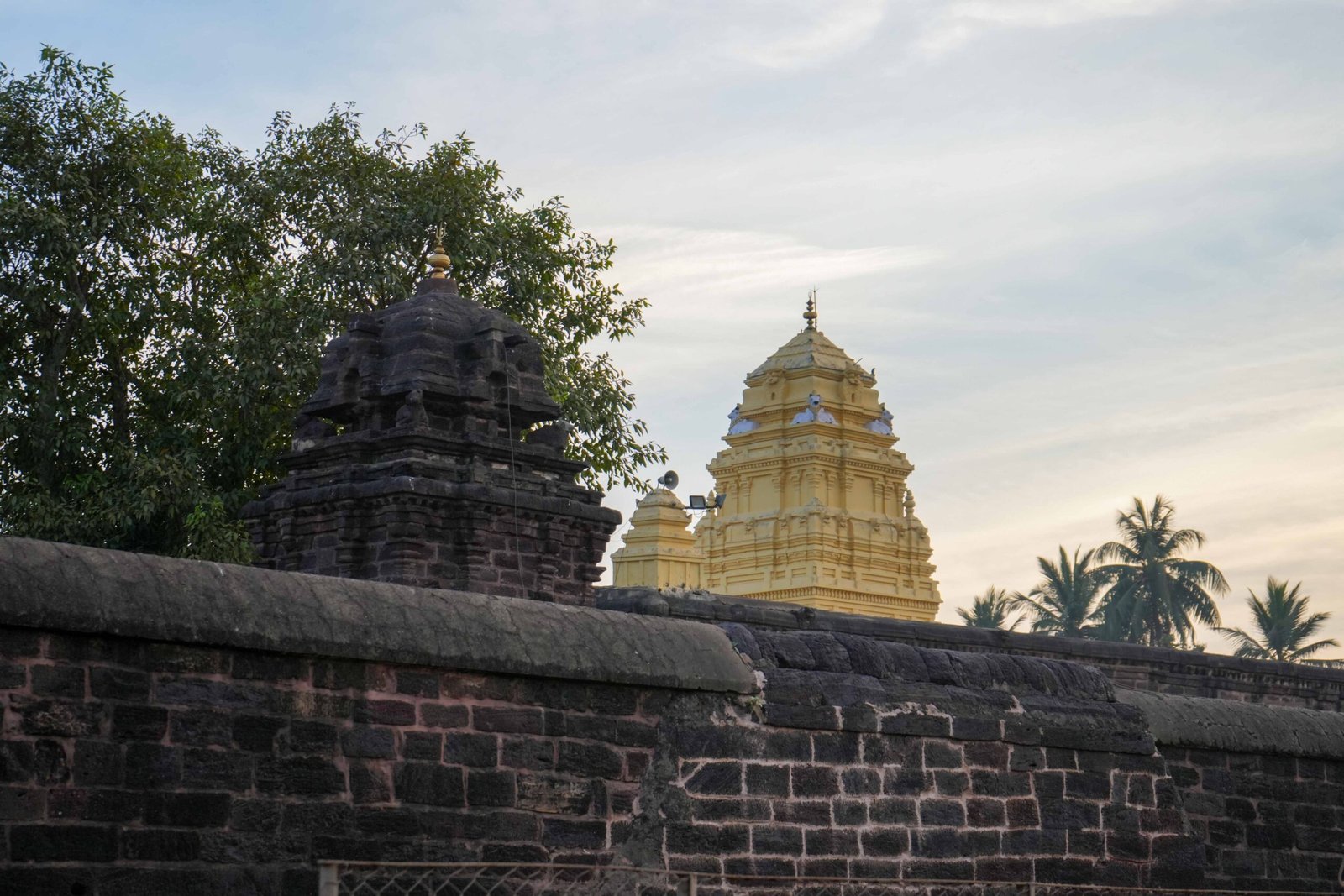
The temple is enclosed by two prakaras (compound walls) separated by spacious courtyard in which minor shrine and mandapas are built. The outer prakara is built of huge granite blocks raised to a great height as that of fort walls. There are four entrances on four directions surmounted by a Gopura (temple tower) attached with mandapas on either side. The north Gopura is now used as the main entrance. The east gopura faces a temple tank. The south and west gopuras are similar to that of east gopura. The outer enclosure consists of a large mandapa with sixty-six pillars in the north-eastern corner consists of a garbhagriha and antharala.
The inner prakara is also built with huge blocks of stone raised to a height of twenty feet with entrances on south and east sides. The south entrance is now being used as the main entance. The inner portion of the prakara is attached with a two storied cloister (covered pillared corridor). The east portion of the cloister is little wider and contains a finely carved Nandi.
The main shrine is located at the center of the inner enclosure consisting of a double storied structure. The plan on ground is rectangular with ground floor consisting of a mandapa and hall enclosing the sanctum. The first floor is reached through a flight of steps from either side of mandapa of ground floor. The first floor consists of a garbhagriha, an antharala, a mukhamandapa and a mahamandapa. The garbhagriha has four doorways in four directions as that of Sarvathobadra model. The temple belongs to sandhara type, in which the circumambulatory path is within the enclosed wall around the garbhagriha. (Now the path is closed). The Vimana on top is of Dvitala (two-storied) and belongs to Nagara order.
There is a miniature prototype of the temple carved out of a monolithic block of stone placed in the inner courtyard.
Art & Sculpture:
The temple consist of several sculptures carved on the pillars, lintels and temple towers. There are icons of various forms of Siva such as Sarabhesamurti, Virabhadra, Nataraja, Lingodhbhavamurti, Vatuka Bhairava and other forms carved at various places of the temple architectural members. In addition to these there are images of Ganesha, Durga, Kartikeya, Mahisasuramardhini, Sapthamatrika, Sarasvati, Narayana, Surya and other Gods carved on various architectural members of the temple.
The most celebrated festival in the temple is the day of Sivaratri, on which the temple draws huge crowd throughout the day. Few rituals and special pujas are performed on that day. All other holy days as per the Saiva agamas are performed in the temple.
6AM-12PM, 4PM-8PM